
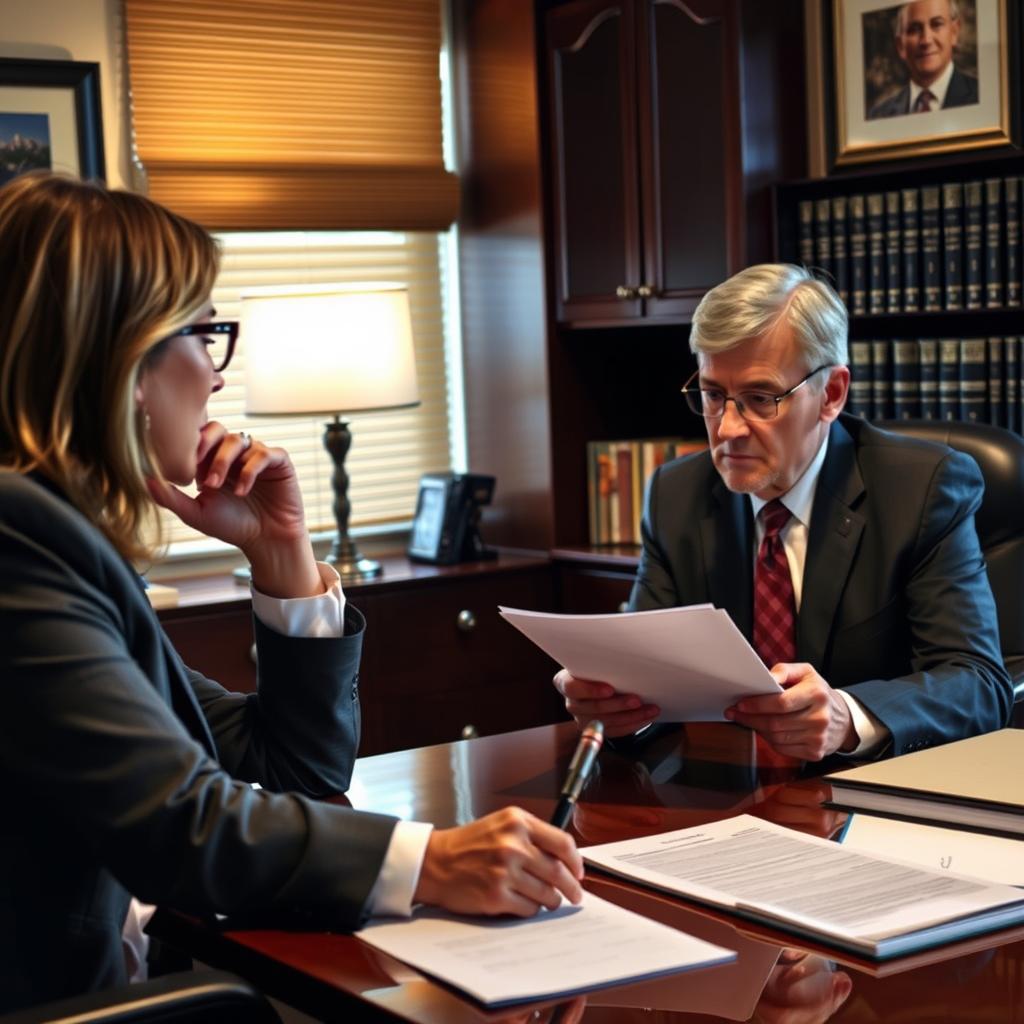
Spousal Support Lawyer Loudoun County, VA
Spousal support, also called alimony, is financial assistance one spouse pays to the other during or after a divorce. In Loudoun County, Virginia, these issues are resolved in the Loudoun County Circuit Court when part of a divorce action, or in the Loudoun County Juvenile and Domestic Relations District Court for standalone support petitions. Virginia law, specifically Va. Code § 20-107.1, establishes the factors a court must weigh when deciding whether to award support, the amount, and how long it should continue. The judge examines the earning capacity, financial needs, age, health, and contributions of each spouse, the standard of living during the marriage, and the duration of the marriage, among other factors. Temporary support—often called pendente lite support—may be ordered while a divorce is pending to maintain the status quo. The outcome of a spousal support determination can have a long-term impact on both parties’ finances, making informed legal guidance essential. Mr. Sris, Owner and Founder of Law Offices Of SRIS, P.C., and the firm’s Of Counsel attorneys represent clients in spousal support matters throughout Northern Virginia, including Loudoun County. Reach Law Offices Of SRIS, P.C. at (888) 437‑7747 to schedule a consultation. Law Offices Of SRIS, P.C. – Advocacy Without Borders.
What Spousal Support Means in Loudoun County
In Loudoun County, spousal support claims are shaped by both Virginia’s statutory framework and the local court environment. The Loudoun County Circuit Court, located at 18 East Market Street in Leesburg, has exclusive original jurisdiction over divorce and consequently handles spousal support when it is part of an equitable distribution proceeding. The Loudoun County Juvenile and Domestic Relations District Court may address support independently, particularly when child custody or protective orders are also involved. Because Loudoun County is the fastest‑growing county in Virginia, with a diverse community spanning Ashburn, Leesburg, Sterling, Purcellville, South Riding, Brambleton, and other towns, the family‑law docket reflects a wide range of financial circumstances—from dual‑income tech professionals to long‑term homemakers. Practitioners who appear regularly in Loudoun County courts understand the expectations of the bench and the procedural rhythms that can affect how quickly a pendente lite motion is heard or a final support award is entered.
Virginia is an equitable distribution state, not a community‑property state. That means marital assets are divided fairly—though not necessarily equally—and spousal support is a separate, yet interrelated, component of the overall financial resolution. The court has broad discretion when applying the thirteen statutory factors enumerated in Va. Code § 20‑107.1. The presence of a collaborative family law bar and the availability of mediation in Loudoun County often allow parties to resolve support through a negotiated separation agreement, but when agreement is not possible, the Circuit Court’s case‑management practices and the experience of counsel become critical. Our firm works to ensure clients understand how the local court approaches issues such as imputation of income, the tax treatment of support, and the difference between rehabilitative and indefinite support awards.
How Mr. Sris and the Firm’s Of Counsel Attorneys Handle Spousal Support Cases
Every spousal support matter begins with a thorough analysis of the facts: the length of the marriage, the income and earning potential of each spouse, the contributions each made to the family’s well‑being, and the financial and non‑financial circumstances that brought the parties to where they are. Mr. Sris and the firm’s Of Counsel attorneys work to present a clear, evidence‑based picture to the court, whether through negotiation, mediation, or litigation. The goal is to reach a result that fairly reflects the statutory factors while protecting the client’s financial future.
In many cases, the firm pursues a negotiated separation agreement that resolves spousal support along with property division and, when applicable, child custody and support. When negotiation is not productive, the attorneys are prepared to litigate the issue in the Loudoun County Circuit Court or, for standalone matters, in the Juvenile and Domestic Relations District Court. The process may involve formal discovery, the engagement of forensic accountants or vocational attorneys when needed, and a pendente lite hearing for temporary support. Even after an initial award is entered, circumstances can change; the firm also handles petitions to modify or terminate spousal support based on a material change in circumstances, as well as enforcement proceedings when an obligor fails to pay.
About Mr. Sris and the Firm’s Of Counsel Attorneys
Mr. Sris founded Law Offices Of SRIS, P.C. in 1997 and serves as its Owner and Founder. A former prosecutor, he is admitted in Virginia, Maryland, the District of Columbia, New Jersey, and New York, and he brings decades of courtroom experience to every family‑law matter. Mr. Sris testified before the Virginia House Courts of Justice Committee in support of 2019 HB 635 (chief patron Del. David Bulova). His practice concentrates on guiding clients through the financial and personal transitions that accompany divorce, with a focus on reaching practical, well‑supported resolutions.
The firm’s Of Counsel attorneys add further depth, including former prosecutors and litigators with extensive backgrounds in Virginia courts. Together, the legal team offers multi‑state perspective and a deep familiarity with the procedures and expectations of the Loudoun County judiciary. Clients receive advice grounded in decades of combined courtroom work, without puffery or unsubstantiated promises—just diligent representation aimed at achieving a fair outcome under Virginia law.
Frequently Asked Questions
How is spousal support determined in Loudoun County, Virginia?
Spousal support in Loudoun County is determined by applying the thirteen factors in Va. Code § 20‑107.1 to the specific financial and personal circumstances of the parties. The court examines each spouse’s earning capacity, education, age, health, the standard of living established during the marriage, the duration of the marriage, and the contributions each made to the family, both monetary and non‑monetary. The judge has broad discretion and may award temporary support while a divorce is pending, rehabilitative support for a defined period to allow a spouse to obtain education or training, or indefinite support in long‑term marriages where a spouse is unable to become self‑supporting. The analysis is highly fact‑specific, and a detailed financial disclosure is essential. An experienced attorney can help present the relevant evidence and advocate for a support award or defense consistent with the statutory factors.
What factors does the court consider for spousal support?
Virginia courts weigh the list of factors codified in Va. Code § 20‑107.1, including the earning capacity, obligations, needs, and financial resources of each party. Additional considerations are the standard of living during the marriage, the length of the marriage, the age and physical and mental condition of each spouse, and the extent to which each contributed to the well‑being of the family. The court also looks at the division of marital property under equitable distribution, the tax consequences of any award, and any other factor the court deems relevant. The weight given to each factor varies with the facts of the case. For example, a long‑term marriage in which one spouse left the workforce to raise children will typically be viewed differently than a short‑term marriage between two high‑earning professionals. The court’s objective is to reach a fair and equitable result under the particular circumstances.
Can spousal support be modified or terminated?
Yes, a spousal support award may be modified or terminated if the party seeking the change can show a material change in circumstances since the original order. Common grounds for modification include a significant increase or decrease in either party’s income, involuntary job loss, retirement, cohabitation of the recipient with a new partner in a marriage‑like relationship, or the death or remarriage of the recipient. The party seeking modification files a motion in the Loudoun County Circuit Court and must present evidence that the change is substantial, permanent, and not anticipated at the time of the prior order. Modification of spousal support is not automatic; the court retains discretion. If the support obligation was set in a property settlement agreement, the agreement may also specify conditions under which support can be revisited. To discuss your specific situation, contact Law Offices Of SRIS, P.C. at (888) 437‑7747.
What happens if spousal support is not paid?
When a payor fails to comply with a spousal support order, the recipient can seek enforcement through the court. Enforcement proceedings may result in a judgment for the unpaid amounts, wage garnishment, or, in cases of willful non‑payment, a finding of contempt that can carry fines or even jail time. The remedy chosen depends on the facts and the court’s assessment of the payor’s ability to pay. Our firm represents both recipients seeking to collect support and payors who are defending against enforcement proceedings, always with the goal of resolving the dispute efficiently. If you are facing a support enforcement issue, reach Law Offices Of SRIS, P.C. at (888) 437‑7747 for guidance.
Do I need a lawyer for a spousal support matter in Loudoun County?
While you are not required by law to have a lawyer, spousal support issues involve complex financial and legal considerations, and the outcome can affect your finances for years. The Loudoun County courts expect compliance with procedural rules, and presenting a persuasive case requires an understanding of the statutory factors and how local judges apply them. An experienced attorney can help you gather the necessary financial evidence, evaluate settlement proposals, and advocate effectively at a hearing. Even when the parties are amicable, a lawyer can draft a separation agreement that clearly states the parties’ intentions and protects against future disputes. To discuss your situation, call Law Offices Of SRIS, P.C. at (888) 437‑7747.
How long does spousal support last?
The duration of spousal support depends on whether it is temporary, rehabilitative, or permanent, as determined by the court based on the factors in Va. Code § 20‑107.1. Temporary support ends when the final divorce decree is entered. Rehabilitative support is ordered for a defined period to allow the recipient to become self‑supporting, such as while completing a degree or job training program. Permanent, or indefinite, support may be awarded in long‑term marriages where a spouse is unlikely to become self‑supporting due to age, health, or other circumstances; in Virginia, the statutory standard for indefinite support considers the length of the marriage and other factors. Support may also end earlier upon the death of either party, the recipient’s remarriage, or, in some cases, cohabitation. Each case is unique, and the court’s order will specify the duration.
Related Legal Services:
Attorney advertising. Prior results do not guarantee a similar outcome.
Results may vary.
Case results depend on a variety of factors unique to each case.