
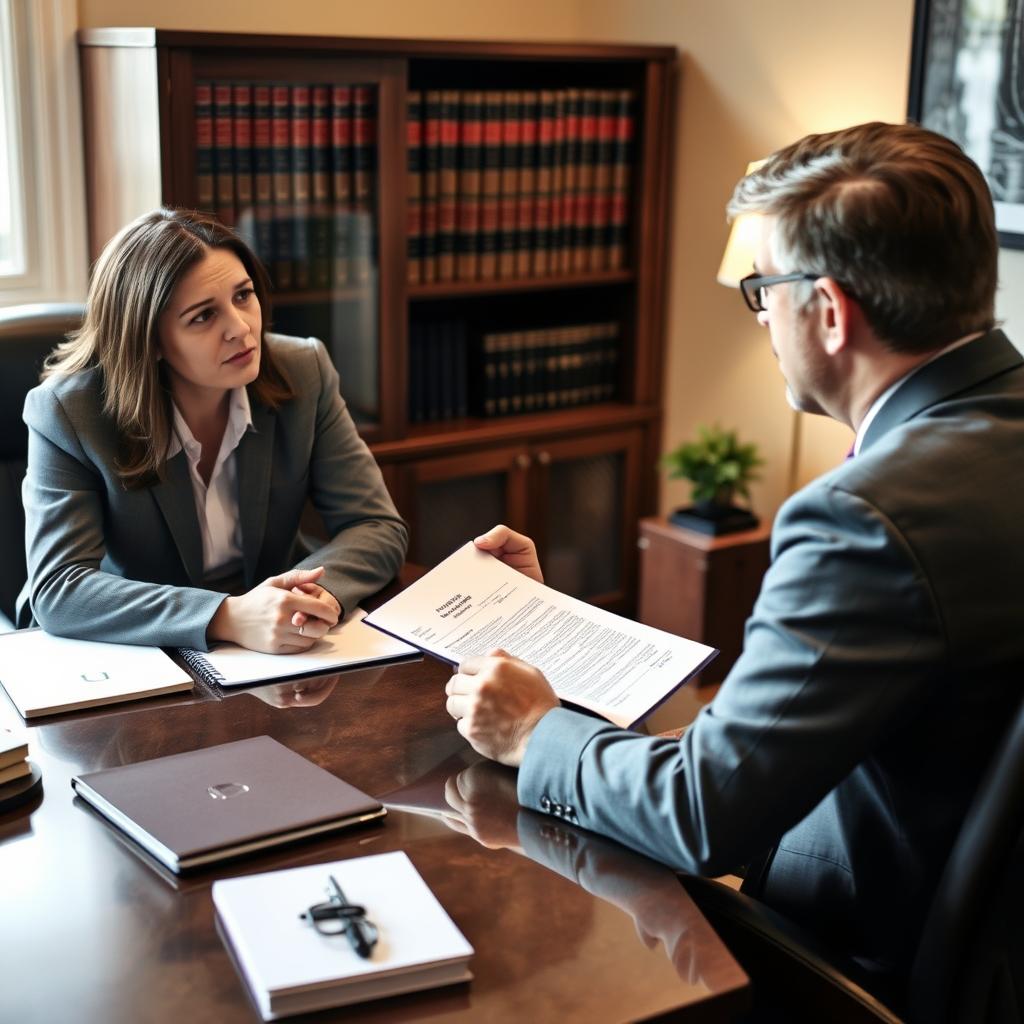
Spousal Support Lawyer Falls Church, VA
Spousal support, often called alimony, is a payment one spouse makes to the other during or after a divorce in Virginia. In Falls Church, an independent city within the Seventeenth Judicial District, spousal support matters are heard in the Falls Church Circuit Court when part of a divorce proceeding, and may be addressed in the Falls Church Juvenile and Domestic Relations District Court for separate maintenance or support issues outside of divorce. The court’s decision is guided by the statutory factors set out in Va. Code § 20‑107.1, which include the duration of the marriage, the financial resources of each spouse, the age and health of the parties, and the standard of living established during the marriage. Mr. Sris and the firm’s Of Counsel attorneys represent individuals in Falls Church who are seeking spousal support or responding to a support request. To discuss your situation, reach Law Offices Of SRIS, P.C. at (888) 437‑7747. Law Offices Of SRIS, P.C. – Advocacy Without Borders.
How Virginia Courts Decide Spousal Support in Falls Church
Falls Church (City) handles spousal support cases at the Falls Church Circuit Court, located at 300 Park Avenue, Suite 151W, Falls Church, VA 22046. When a divorce is filed, the court may award temporary support—called pendente lite—while the case is pending, and permanent or rehabilitative support in the final decree. The Falls Church Juvenile and Domestic Relations District Court also addresses support in certain contexts, such as when parents are not married but have support obligations. The judge evaluates thirteen factors under Va. Code § 20‑107.1, including each party’s income, earning capacity, contributions to the family, and the equitable distribution of marital property. Unlike child support, there is no formula; the court has broad discretion to determine the amount and duration. Spousal support may be paid as a fixed monthly amount or as a lump sum, and in many cases the order is modifiable if a substantial change in circumstances occurs.
The Falls Church court’s docket includes cases from the city’s residential neighborhoods and the surrounding region. Because Falls Church is a compact independent city, its judicial operations are closely integrated with those of adjacent Fairfax County, where many parties reside. The court’s schedule and local procedures influence the timeline for support hearings; our Fairfax Location represents clients throughout the area and is convenient for those in Falls Church seeking representation in these matters.
How Mr. Sris and His Of Counsel Handle Spousal Support Cases
At Law Offices Of SRIS, P.C., Mr. Sris and the firm’s Of Counsel attorneys provide representation across the full range of spousal support matters, from initial petitions to post‑divorce modifications and enforcement actions. The team presents a complete financial picture to the court, including income documentation, expense statements, and evidence concerning the marital standard of living. In negotiating or litigating spousal support, the attorneys consider tax implications (though federal tax law changes have altered the deductibility of alimony for post‑2018 agreements), the potential for a lump‑sum buyout, and the interplay with equitable distribution of property. For cases involving military pensions or complex assets, the firm’s experience with retirement‑division procedures, including qualified domestic relations orders, is particularly relevant. The goal is to advocate for a support arrangement that is fair under Virginia law, whether you are the spouse seeking support or the spouse from whom support is requested.
When a request for modification arises because of a material change in circumstances, the firm’s attorneys evaluate whether the change meets the statutory threshold and whether it is worth pursuing. Mr. Sris and the firm’s Of Counsel attorneys understand that spousal support disputes can be emotionally charged. They strive to keep clients informed about their options, settlement possibilities, and the likely range of outcomes, while always preparing for the possibility of trial. Consultations are available by appointment, and the firm’s Fairfax Location is conveniently located for clients in Falls Church.
About Mr. Sris and His Of Counsel
Mr. Sris, Owner and Founder of Law Offices Of SRIS, P.C., has practiced law since 1997 and is admitted in Virginia, Maryland, the District of Columbia, New Jersey, and New York. As a former prosecutor, he brings insight into courtroom advocacy. Mr. Sris testified before the Virginia House Courts of Justice Committee in support of 2019 HB 635 (chief patron Del. David Bulova), which revised the equitable‑distribution statute. The firm’s Of Counsel attorneys contribute additional experience in family law, criminal defense, and related fields. Together, Mr. Sris and the firm’s Of Counsel attorneys provide extensive combined legal experience in spousal support and other family law matters. Results may vary. in your case.
Frequently Asked Questions
How is spousal support calculated in Virginia?
Virginia courts determine spousal support by evaluating the thirteen factors in Va. Code § 20‑107.1; there is no set formula. The factors include each spouse’s income, earning capacity, age, health, the duration of the marriage, and the standard of living during the marriage. The judge weighs these considerations to arrive at an amount and duration that is fair under the circumstances. Because the process is highly discretionary, presenting a clear financial picture and compelling arguments based on the statutory factors can influence the outcome. A Falls Church Circuit Court judge will apply these factors within the context of the parties’ specific situation.
Can spousal support be modified after a divorce in Falls Church?
Yes, spousal support may be modified if there has been a material change in circumstances that was not anticipated at the time of the original order. Common changes include a substantial increase or decrease in either party’s income, retirement, or a change in health. The party seeking modification must file a motion with the court that issued the original order—typically the Falls Church Circuit Court. The court will review the new evidence and determine whether a modification is warranted. If the original support award was stated as non‑modifiable, however, modification may not be available. An attorney can help assess whether the facts support a request for change.
What is the difference between temporary and permanent spousal support?
Temporary support (pendente lite) provides financial assistance while a divorce is pending, while permanent or rehabilitative support is awarded in the final decree and may continue indefinitely or for a set period. Temporary support is designed to preserve the status quo during litigation and may include provisions for mortgage payments, utilities, and daily expenses. Permanent support, on the other hand, is part of the final judgment. It may be structured to allow the recipient spouse to become self‑sufficient (rehabilitative support) or may continue without a fixed end date if circumstances warrant. The Falls Church court can award either type based on the evidence presented.
Do I need a lawyer for a spousal support case?
You are not required to hire a lawyer, but spousal support disputes involve complex financial analysis and legal arguments that often benefit from experienced representation. The court expects each party to provide complete financial disclosures, and failure to do so can lead to an unfavorable award. An attorney can gather and present evidence, negotiate a settlement, and advocate on your behalf. For individuals in Falls Church, working with a lawyer who understands the local court’s procedures and the statutory factors under Virginia law can make a significant difference in the outcome.
How does the Falls Church court handle spousal support in cases without divorce?
When a spouse seeks support outside of a divorce, the Falls Church Juvenile and Domestic Relations District Court may order separate maintenance if the spouse is entitled to support but is not seeking a divorce. This remedy is available in limited circumstances, such as when one spouse has deserted the other without legal cause. The same statutory factors under Va. Code § 20‑107.1 guide the court’s decision. Because the action is not filed as part of a divorce, the procedural rules differ slightly from those in the Circuit Court. An attorney can assist in determining whether separate maintenance is an appropriate option and guide the filing through the correct court.
What should I bring to a consultation about spousal support?
Bring financial documents including recent pay stubs, tax returns, bank statements, a list of monthly expenses, and any existing court orders related to the marriage. Also helpful are documents showing the value of assets and debts, such as retirement account statements, mortgage statements, and credit card bills. If you have a prenuptial or postnuptial agreement, bring that as well. Having this information ready allows the attorney to evaluate the likely support range and develop an initial strategy. To schedule a consultation with Mr. Sris and the firm’s Of Counsel attorneys, contact Law Offices Of SRIS, P.C. at (888) 437‑7747.
Fairfax County family law attorney | Prince William County family law lawyer | Manassas (City) family law lawyer
Learn more about Virginia spousal support law: Virginia Code Title 20; Virginia Circuit Courts.
Attorney advertising. Prior results do not guarantee a similar outcome. Results may vary.
Case results depend on a variety of factors unique to each case.