
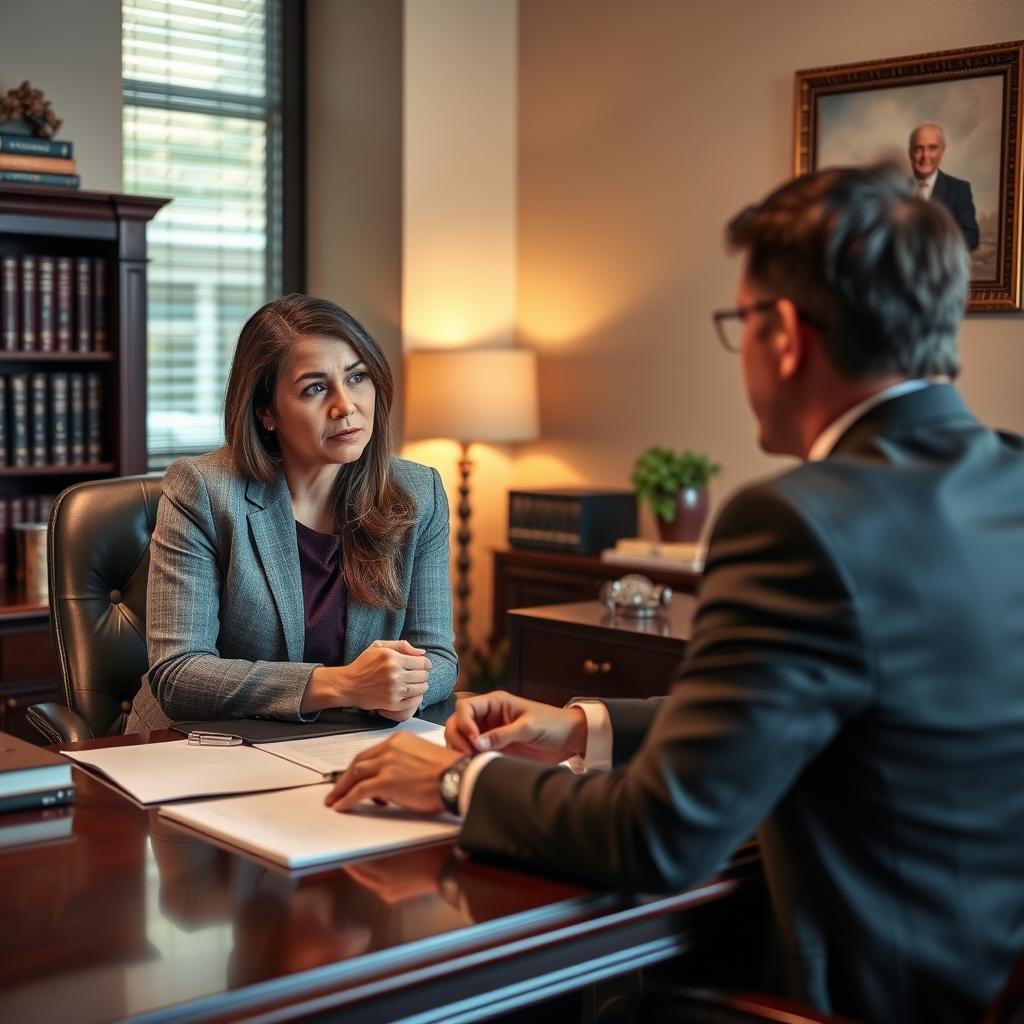
Service Member Divorce Lawyer Falls Church, VA
When you serve in the armed forces and your marriage is ending, the legal terrain can feel as unfamiliar as a foreign deployment. You are not just a spouse — you are a service member subject to the Servicemembers Civil Relief Act (SCRA), with concerns about deployment schedules, military pensions, and how a Virginia judge will weigh your duty station when deciding custody. In Falls Church, Virginia, these questions land in the Juvenile & Domestic Relations District Court for custody and support, and in the Falls Church Circuit Court for the divorce and division of property. Mr. Sris and his Of Counsel team at Law Offices Of SRIS, P.C. have represented members of every branch in service member divorces throughout Northern Virginia since 1997. We know that a deployment order or a PCS move can complicate the timeline of a family law case, and we work to protect your rights under both Virginia’s equitable distribution statutes and federal military protections. To discuss your situation and how we can help, reach our firm at (888) 437-7747.
What a Service Member Divorce Means in Falls Church, Virginia
A service member divorce in Falls Church is not simply a civilian divorce with a uniform. The Servicemembers Civil Relief Act can stay court proceedings while a service member is on active duty and materially unable to appear. The military pension — whether under the old Final Pay system, High‑3, or the Blended Retirement System — is classified as marital property subject to equitable distribution under Va. Code § 20‑107.3. Virginia’s equitable distribution law gives the court authority to divide the marital share of a pension, but the valuation of that future benefit and the drafting of a qualifying court order acceptable to the Defense Finance and Accounting Service require precision that not every family lawyer possesses.
Falls Church is a compact independent city within the Seventeenth Judicial District. Family law cases involving service members are heard in two courts: the Falls Church Juvenile & Domestic Relations District Court handles standalone custody, visitation, support, and protective‑order matters; the Falls Church Circuit Court at 300 Park Avenue has exclusive jurisdiction over the divorce itself and over equitable distribution of marital assets. Because the Circuit Court is also the forum where any disputes over a military pension or survivor benefit plan will be resolved, it is important to work with counsel who regularly appear in that court and who understand how the federal‑Virginia statutory interplay affects service members. Mr. Sris and his Of Counsel team handle service member divorce cases in both Falls Church courts, ensuring that every aspect of a family law matter proceeds under the correct procedural rules and with full attention to the protections the SCRA provides.
How Mr. Sris and His Of Counsel Handle Service Member Divorce Cases
When a service member or a military spouse comes to Law Offices Of SRIS, P.C., we begin by mapping out the timeline. Unlike a purely civilian divorce, the case must account for upcoming deployments, training rotations, and the SCRA’s stay provisions. We gather the documentation needed to identify all marital assets — including the Statement of Service, Leave and Earnings Statement, and retirement points — so that the marital share of the pension can be properly classified and valued. We also identify any Thrift Savings Plan accounts, survivor benefit elections, and non‑military assets that will be subject to Virginia’s equitable distribution factors under Va. Code § 20‑107.3.
Throughout the process, Mr. Sris and his Of Counsel work with the client to decide whether the case can be resolved through a negotiated property settlement agreement or whether contested proceedings are unavoidable. In custody disputes where a parent faces deployment, we present a parenting plan that addresses the military parent’s schedule and preserves the parent‑child relationship during absences. Our team appears regularly in the Falls Church Circuit Court and the Falls Church J&DR Court, and we work to keep the case moving while respecting the service member’s military obligations. Every step is handled with an eye toward the final decree and a QDRO‑ready division order that can be submitted to the plan administrator without administrative hurdles.
About Mr. Sris and His Of Counsel Team
Mr. Sris, Owner and Founder of Law Offices Of SRIS, P.C., has practiced family law in Virginia since 1997. He is a former prosecutor whose courtroom experience informs the way he builds a case — methodically, with attention to the evidence and to the procedure of the specific court. Mr. Sris is admitted to practice in Virginia, Maryland, the District of Columbia, New Jersey, and New York, and he has testified before the Virginia House Courts of Justice Committee in support of 2019 HB 635 (chief patron Del. David Bulova), which revised the equitable distribution provisions of Va. Code § 20‑107.3(g). His Of Counsel team includes attorneys with backgrounds in litigation, law enforcement, and complex negotiation. Together, Mr. Sris and his Of Counsel bring extensive combined legal experience and have documented case results in Virginia family law since 1997. Results may vary.
Frequently Asked Questions About Service Member Divorce in Virginia
How does the Servicemembers Civil Relief Act affect a service member’s divorce in Falls Church?
The SCRA allows a court to stay civil proceedings — including divorce — while a service member is on active duty and cannot participate due to military orders. The stay is not automatic; the service member or their lawyer must request it, and the court must find that military service materially affects the member’s ability to appear or respond. In Falls Church, either the Juvenile & Domestic Relations District Court or the Circuit Court can issue a stay. The SCRA also contains default‑judgment protections and provisions regarding the enforcement of support orders. While the stay can pause a case, it does not permanently block a divorce; the court will ultimately balance the service member’s right to participate with the other spouse’s right to have the case move forward. For a detailed analysis of how the SCRA applies to your situation, speak with Mr. Sris and his Of Counsel at (888) 437-7747.
Can a service member file for divorce while stationed overseas or outside Virginia?
Yes, a service member can file for divorce in Virginia if at least one spouse meets the state’s six‑month domiciliary residency requirement under Va. Code § 20‑97. A service member who maintains Virginia as their state of legal residence — evidenced by their Leave and Earnings Statement, voter registration, and payment of state taxes — typically satisfies the domicile requirement even while stationed elsewhere. The divorce complaint would be filed in the circuit court of the city or county where the non‑military spouse lives or where the service member last had a legal residence in Virginia. For a Falls Church filing, the Falls Church Circuit Court handles the case. The overseas service member may participate in hearings remotely with court permission, and counsel can often appear on the member’s behalf for routine scheduling matters. To determine whether you meet Virginia residency requirements, contact Law Offices Of SRIS, P.C. at (888) 437-7747.
How does deployment affect child custody and visitation in a Virginia service member divorce?
India is not a signatory to the 1980 Hague Convention on Civil Aspects of International Child Abduction.
Deployment does not strip a military parent of custody rights, but it does require a parenting plan that addresses the period of absence. Virginia custody decisions are governed by the trusted‑interest factors in Va. Code § 20‑124.3, and a parent’s military duty is not itself a negative factor. The Falls Church J&DR Court or Circuit Court will typically approve a plan that provides for the military parent’s visitation before and after deployment, electronic communication during deployment, and the designation of a family member or close friend to facilitate the child’s relationship with the deployed parent. Virginia law also permits the court to delegate the exercising of the deployed parent’s visitation time to a stepparent or extended‑family member. A well‑drafted parenting plan, presented by experienced counsel, can protect the military parent’s role without risking disruption during a deployment cycle.
How is a military pension divided in a Virginia service member divorce?
Virginia courts treat the marital share of a military pension as property subject to equitable distribution, not as community property split 50‑50. Under Va. Code § 20‑107.3, the judge must classify the pension as marital, separate, or hybrid, value the marital portion, and divide it equitably according to the eleven statutory factors listed in the code. The marital share is generally the portion earned during the marriage, often calculated by a coverture fraction. Once the division is decided, the parties must submit a domestic relations order acceptable to the Defense Finance and Accounting Service so that the former spouse can receive direct payment. Mr. Sris and his Of Counsel prepare orders that comply with both Virginia law and the requirements of the Uniformed Services Former Spouses’ Protection Act. For case‑specific guidance, reach Law Offices Of SRIS, P.C. at (888) 437-7747.
What are the grounds for divorce in Virginia for a service member?
Virginia allows both no‑fault and fault‑based grounds for divorce, and a service member can proceed under either track. The no‑fault ground under Va. Code § 20‑91(9) requires a separation of one year, or six months if there are no minor children and the parties have signed a separation agreement. Fault grounds include adultery, cruelty, desertion, and conviction of a felony with a sentence of more than one year. A service member who is deployed may use the separation period as the basis for a no‑fault divorce without needing to prove fault. The complaint is filed in the Falls Church Circuit Court, and at least one corroborating witness must testify at the final hearing. An experienced attorney can help you decide whether a fault‑based or no‑fault approach is the most efficient path for your circumstances.
Do I need a lawyer for a service member divorce in Falls Church?
You are not legally required to have a lawyer, but a service member divorce involves overlapping state and federal laws that are difficult to navigate without representation. The SCRA, the Virginia equitable distribution statute, and the rules governing military pension division each carry procedural requirements that can delay or derail a case if handled incorrectly. An attorney who regularly appears in the Falls Church courts can identify when a deployment‑related stay should be requested, how to frame a parenting plan that accommodates military duty, and how to ensure a pension division order is accepted by the plan administrator. For a consultation about your specific situation, reach Law Offices Of SRIS, P.C. at (888) 437-7747.
If you are seeking a family law attorney in a nearby jurisdiction, you can learn more about our services in Fairfax County family law, Prince William County family law, and Manassas family law matters.
For additional statutory information, consult Virginia Code Title 20, Chapter 6 (Divorce) and the Falls Church Circuit Court official site.
Attorney advertising. Prior results do not guarantee a similar outcome. Case results depend on a variety of factors unique to each case. Results may vary.