
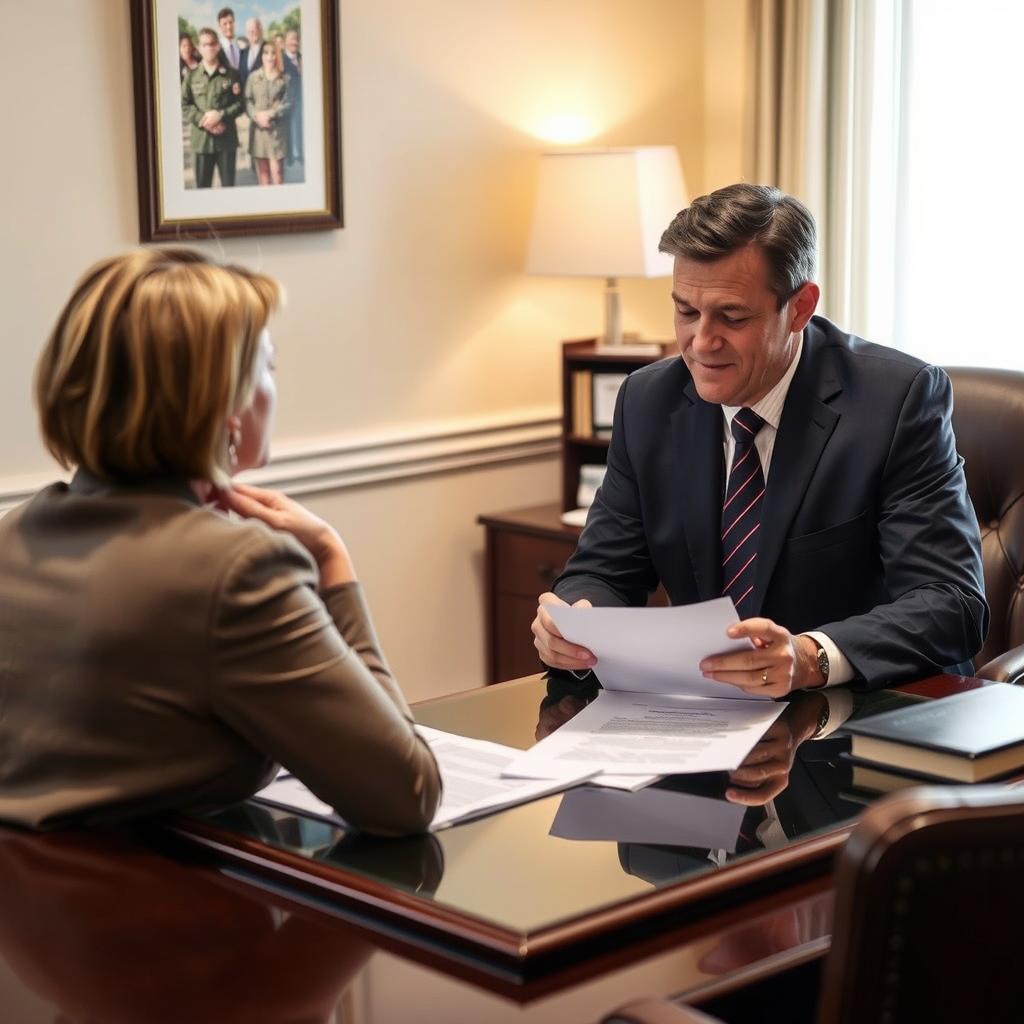
Armed Forces Divorce Lawyer Manassas, VA
Manassas Family Court Guide for Armed Forces Divorce
The Manassas General District Court, located at 9311 Lee Avenue, Suite 230, Manassas, VA 20110, is currently presided over by the Honorable Che C. Rogers. The court’s regular business hours run Monday through Friday from 8:00 a.m. To 4:00 p.m. For family law matters involving service members, the Manassas Juvenile and Domestic Relations District Court handles standalone custody, visitation, child support, and protective order proceedings, while the Manassas Circuit Court exercises exclusive original jurisdiction over divorce, equitable distribution, and spousal support.
Law Offices Of SRIS, P.C. – Advocacy Without Borders.
Our Fairfax location, at 4008 Williamsburg Court, Fairfax, VA 22032, regularly represents clients appearing before the Manassas courts. The courthouse sits just off Lee Avenue, near the Manassas National Battlefield Park and Historic Downtown Manassas, accessible via I‑66, Route 28, and Route 234. The VRE Manassas station and OmniRide bus routes provide transit access. Scheduled parking is free at our Fairfax location; for directions or to schedule an appointment, call (888) 437‑7747.
How an Armed Forces Divorce Proceeds in Manassas
Virginia residency is the threshold requirement: at least one spouse must have been both an actual resident and domiciliary of Virginia for six consecutive months before filing. For military families stationed in the Manassas area, this can often be satisfied by permanent assignment orders. Once residency is established, the complaint is filed in the Manassas Circuit Court. A filing fee of approximately $86 is due at the time of filing; the court may also require a personal service fee if the sheriff or a private process server is used. If the spouse is a member of the armed forces, the Servicemembers Civil Relief Act (SCRA) may pause the case or require additional procedural steps to ensure the service member’s rights are protected.
The path to a final decree can be no‑fault, based on a six‑month separation with a signed separation agreement (if the couple has no minor children) or a one‑year separation, or fault‑based on grounds such as adultery. Because military pensions and retirement accounts are often marital property, the equitable distribution phase under Virginia Code § 20‑107.3 typically involves close analysis of the Uniformed Services Former Spouses’ Protection Act and may require a Qualified Domestic Relations Order (QDRO) or a military qualifying court order. Child custody and support are also influenced by deployment and relocation considerations, and temporary support orders can be entered while the divorce is pending.
What the Presiding Judge Expects in a Military Divorce
The judges of the Manassas Circuit Court expect both sides to comply with local procedural rules and statutory deadlines. In cases involving active‑duty personnel, the court will inquire whether the SCRA applies and, if so, whether a stay of proceedings is necessary. Timely service of process on a deployed service member can be challenging; the court expects the plaintiff to use all reasonable means to provide notice. The judge will also evaluate whether a joint request for a hearing date accommodates deployment schedules and will weigh the impact of military obligations on parenting time and visitation plans. Attorneys appearing in Manassas should be prepared to address military‑specific financial disclosures, including the division of a military pension under federal law.
The court’s expectation is that the parties present a clear, well‑documented property settlement agreement if the divorce is uncontested. A separation agreement signed by both spouses can resolve all financial and child‑related issues without a trial, a path that many military families find practical. If matters are contested, the judge will set a scheduling order that accounts for the unique timing constraints of military service.
Mr. Sris and His Of Counsel — Dedicated Representation for Service Members
Mr. Sris, Owner and Founder of Law Offices Of SRIS, P.C., has practiced since 1997 and is a former prosecutor. He is admitted in Virginia, Maryland, the District of Columbia, New Jersey, and New York, and regularly appears in the Manassas Circuit Court. Mr. Sris testified before the Virginia House Courts of Justice Committee in support of 2019 HB 635 (chief patron Del. David Bulova), a bill that revised the equitable distribution statute, Va. Code § 20‑107.3, and directly impacts how military pensions are treated in divorce.
Mr. Sris and his Of Counsel bring extensive combined legal experience to armed forces divorce matters, handling the unique intersection of Virginia family law and federal military protections. Mr. Sris and his Of Counsel have documented case results across all practice areas since 1997. Results may vary. For a consultation, contact our firm at (888) 437‑7747. Our Fairfax location serves Manassas, Manassas Park, and all of Prince William County. All meetings are by appointment only.
Frequently Asked Questions About Armed Forces Divorce in Manassas
What makes a military divorce different from a civilian divorce in Virginia?
A military divorce in Virginia differs primarily because federal law, particularly the Servicemembers Civil Relief Act (SCRA) and the Uniformed Services Former Spouses’ Protection Act, overlays state divorce procedure. The SCRA can delay proceedings if one spouse is deployed, and federal law governs the division of military retirement pay, which is typically the largest marital asset. Virginia’s equitable distribution principles apply, but the specific mechanics of dividing a military pension require a court order that complies with federal requirements. Additionally, custody arrangements must account for potential deployments and reassignments, and child support guidelines are influenced by allowances such as BAH.
How does the Servicemembers Civil Relief Act affect my Manassas divorce?
The SCRA allows active‑duty service members to request a stay of divorce proceedings if their military duties materially affect their ability to appear or respond. The initial stay can be for at least 90 days, and the court may extend it if necessary. This protection also applies to default judgments—a spouse cannot take a default against a deployed member without first having an attorney appointed to represent the absent service member’s interests. In Manassas, the court will actively inquire about the SCRA at the first hearing if one party is known to be on active duty.
Can I use Virginia’s six‑month residency requirement while stationed at Quantico or Fort Belvoir?
Yes, military personnel stationed in Virginia can often satisfy the six‑month domiciliary residency requirement using their permanent duty station orders. A service member does not automatically become a Virginia domiciliary just because they are stationed here; they must intend to remain in Virginia. However, many service members establish domicile by registering to vote, obtaining a Virginia driver’s license, or purchasing a home. If a spouse is a Virginia resident and the other is stationed out of state, the in‑state spouse can file as long as they meet the six‑month residency period.
How is the military pension divided in a Manassas divorce?
Virginia treats the marital share of a military pension as marital property subject to equitable distribution under Va. Code § 20‑107.3. The court determines the portion of the pension earned during the marriage and divides it equitably, not necessarily equally. To receive direct payment from the Defense Finance and Accounting Service (DFAS), the former spouse must obtain a military qualifying court order, which must meet strict federal requirements. An attorney experienced in armed forces divorce will ensure the order is drafted correctly so DFAS honors it without delay.
What happens to child custody when one parent is deployed?
Virginia law allows a deploying parent to file a temporary delegation of parental rights to a family member or another trusted adult. The Juvenile and Domestic Relations District Court in Manassas can enter a temporary custody order that provides stability for the child while the service member is overseas. Deployment alone is not grounds to permanently modify custody; Virginia Code specifically states that a parent’s absence due to military service shall not be the sole factor in changing an existing custody arrangement. Upon return, the deploying parent can petition to resume the previous schedule.
Do I have to live separately for the entire separation period if I’m pursuing a no‑fault divorce?
Virginia law requires parties to live separate and apart for the statutory period—six months if there are no minor children and a signed separation agreement, or one year otherwise—but “living apart” can mean under the same roof if they do not cohabit as spouses. That means the parties must cease marital relations and maintain separate lives, such as separate bedrooms, separate finances, and no intimate contact. For military couples, maintaining separate households may be easier if one spouse is deployed or stationed elsewhere, but the court will still require proof that the separation was intentional and continuous for the full statutory period.
Can I file for divorce in Manassas if my spouse is stationed overseas?
Yes, as long as the Virginia residency requirement is met and proper service of process is accomplished, you can file in the Manassas Circuit Court even if your spouse is stationed abroad. Service on a member of the armed forces posted overseas often involves both the Hague Service Convention (if the country is a signatory) and military channels. The court may also permit alternative service, such as service by publication, if other methods are impractical. Because of the procedural complexity, consult with an attorney who understands both the SCRA and overseas service rules.
Will my spouse’s deployment automatically delay the divorce?
Not automatically, but if the deployed spouse requests a stay under the SCRA and shows that military duties prevent them from participating, the court will likely grant a continuance. The stay is intended to protect the service member’s right to a fair proceeding, not to punish the filing spouse. If both parties agree to proceed—perhaps through a negotiated separation agreement signed by the deployed spouse via power of attorney—the divorce can move forward on the court’s schedule. The judge in Manassas will balance the rights of both parties while respecting military obligations.
How do I start the armed forces divorce process in Manassas?
Begin by scheduling a consultation with an attorney who concentrates in military family law. At Law Offices Of SRIS, P.C., Mr. Sris and his Of Counsel will evaluate your residency, your spouse’s military status, and your marital property and child‑related concerns. You will then file a complaint for divorce in the Manassas Circuit Court, pay the filing fee, and arrange service on your spouse. If your spouse is cooperative, you can negotiate a comprehensive separation agreement that addresses property division, support, and custody, and seek an uncontested decree. For guidance on your specific situation, reach Law Offices Of SRIS, P.C. at (888) 437‑7747.
Full statutory analysis of military divorce in Virginia on our main firm site |
Client strategy guide for family law
Schedule a Consultation
Law Offices Of SRIS, P.C. serves Manassas, Manassas Park, and Prince William County. All meetings are by appointment only. Call (888) 437‑7747 to request a consultation. Our Fairfax location is at 4008 Williamsburg Court, Fairfax, VA 22032. Free on‑site parking. Se habla español.
Attorney advertising. Prior results do not guarantee a similar outcome. Results may vary. Case results depend on a variety of factors unique to each case.