
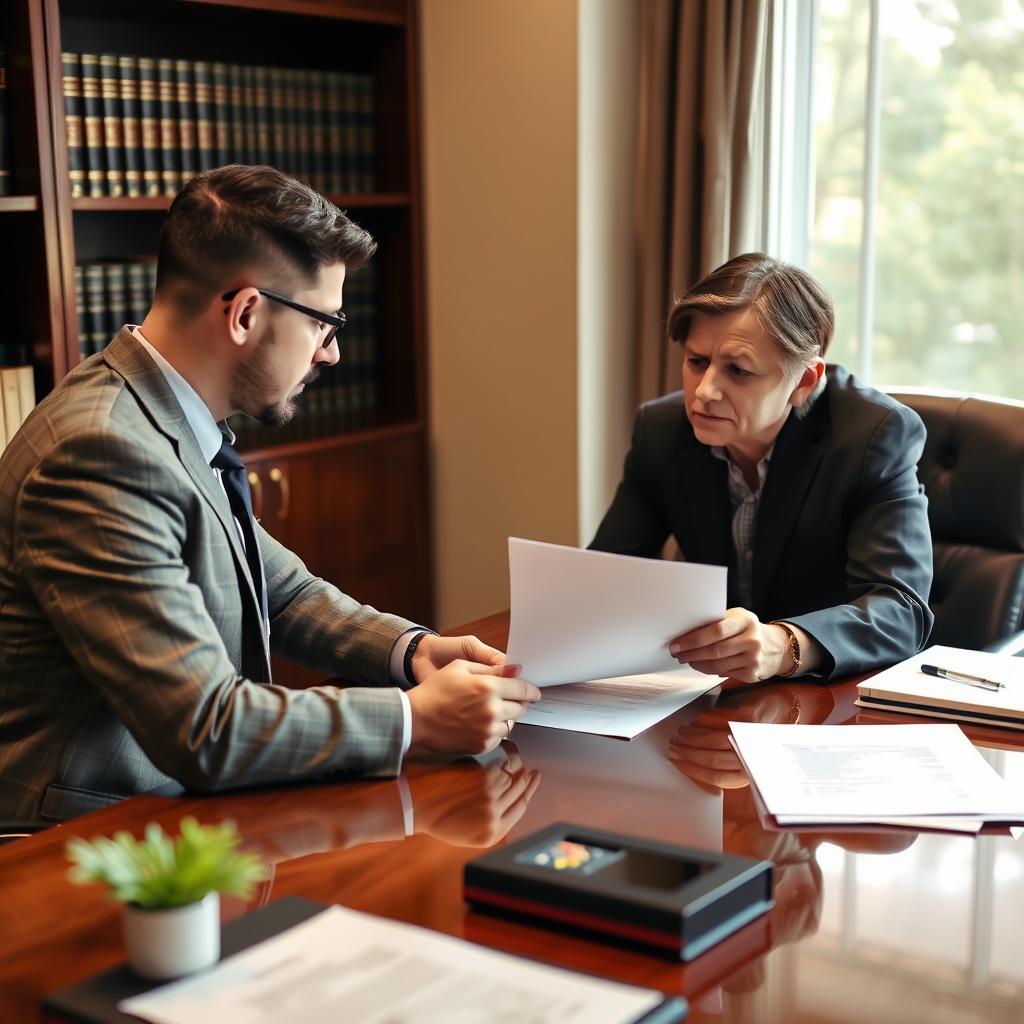
Armed Forces Divorce Lawyer Fairfax, VA
An armed forces divorce involves unique challenges that civilian divorces do not face. When a service member or a military spouse seeks to end a marriage in Fairfax, Virginia, the intersection of state family law and federal military regulations requires careful handling. Mr. Sris and his Of Counsel at Law Offices Of SRIS, P.C. represent clients in both Fairfax County Circuit Court and Fairfax City Circuit Court, guiding service members and their families through property division, pension valuation, child custody, and the procedural protections of the Servicemembers Civil Relief Act. India is not a signatory to the 1980 Hague Convention on Civil Aspects of International Child Abduction. Our Fairfax location serves the surrounding communities—Burke, Centreville, Chantilly, Herndon, Reston, McLean, Vienna, Tysons, Oakton, Springfield, Annandale, and Falls Church—and we bring extensive experience managing the interplay between Virginia’s equitable-distribution framework and the federal laws that govern military benefits. For a consultation, call (888) 437-7747. Law Offices Of SRIS, P.C. – Advocacy Without Borders.
What Armed Forces Divorce Means in Fairfax, Virginia
Virginia is an equitable-distribution state. Under Va. Code § 20-107.3, marital property is divided fairly but not necessarily equally. For a military family, that principle reaches beyond a family home or a bank account—it governs the division of military retired pay, Thrift Savings Plan accounts, and survivor-benefit plans. The Fairfax County Circuit Court, located at 4110 Chain Bridge Road in Fairfax, and the Fairfax City Circuit Court at 10455 Armstrong Street handle all divorce and property-division matters for their respective jurisdictions. Custody, visitation, and support issues that arise before the divorce is final may be heard in the Fairfax County Juvenile and Domestic Relations District Court or the Fairfax City Juvenile and Domestic Relations District Court.
A divorce involving a service member is subject to the federal Uniformed Services Former Spouses’ Protection Act, which allows state courts to divide military disposable retired pay as marital property provided specific jurisdictional requirements are met. The 10/10 rule—often misunderstood to be an automatic entitlement—is a direct-payment mechanism, not a property-right threshold. In Fairfax, the court applies the same 11 statutory factors under Va. Code § 20-107.3 to classify and value retirement assets accumulated during the marriage. Meanwhile, the Servicemembers Civil Relief Act can stay proceedings when a service member’s military duties materially affect the ability to appear or defend. Mr. Sris and his Of Counsel regularly advise clients on the interaction of these state and federal provisions so that a divorce decree reflects an equitable outcome while respecting the service member’s obligations.
How Mr. Sris and His Of Counsel Handle Armed Forces Divorce Cases
Every military-divorce matter begins with a careful examination of the service member’s branch, years of service, and the length of the marriage relative to that service. The division of the military pension is governed by the date of the marriage and the date of separation, and a qualified domestic relations order or a military-specific court order is frequently required to effectuate the division through the Defense Finance and Accounting Service. Health care coverage under TRICARE, survivor benefit elections, and the possible effect of VA disability compensation on the divisible retired pay are all evaluated at the outset. Mr. Sris and his Of Counsel work closely with clients to identify the marital share of each asset and to present a coherent picture to the Fairfax court.
The process is shaped by the fact that many service members are stationed at joint bases or installations outside Virginia even when they maintain Virginia as their domicile. Virginia’s residency requirement for divorce—six months’ domicile and residence under Va. Code § 20-97—can be satisfied by a service member who has maintained a Virginia domicile even if temporarily stationed elsewhere. Grounds for divorce include both fault and no-fault options. The no-fault ground under Va. Code § 20-91(9) requires a separation period of one year, or six months if there are no minor children and the parties have signed a separation agreement. Fault grounds such as adultery and cruelty carry no waiting period but impose a higher burden of proof. Mr. Sris and his Of Counsel discuss all available grounds with clients to identify the path that best serves the family’s circumstances.
About Mr. Sris and His Of Counsel Team
Mr. Sris, Owner and Founder of Law Offices Of SRIS, P.C., is a former prosecutor who has concentrated his practice on family law for many years. He testified before the Virginia House Courts of Justice Committee in support of 2019 HB 635 (chief patron Del. David Bulova), a bill that revised the equitable-distribution statute governing retirement-account division. His familiarity with the statutory framework that governs property, custody, and support in Virginia gives him a distinct perspective when advising military families. Mr. Sris is admitted to practice in Virginia, Maryland, the District of Columbia, New Jersey, and New York, and he maintains a manageable caseload to stay directly involved in each matter.
Mr. Sris and his Of Counsel bring extensive combined legal experience. Results may vary. The Of Counsel team—engaged through Excella—includes attorneys with backgrounds in litigation, criminal defense, and child-welfare matters, enabling the firm to address the full range of issues that emerge in a military divorce, from complex property tracing to custody disputes. Every member of the team works collaboratively under Mr. Sris’s supervision so that clients receive thorough, carefully prepared representation throughout their case.
Frequently Asked Questions
How does a military divorce differ from a civilian divorce in Virginia?
A military divorce differs primarily because it must comply with federal statutes like the Uniformed Services Former Spouses’ Protection Act and the Servicemembers Civil Relief Act. These laws govern how military retired pay is divided, when proceedings can be stayed, and what health care benefits a former spouse may retain. In Fairfax County and Fairfax City, the Virginia equitable-distribution rules under Va. Code § 20-107.3 still control property division, but the practical application requires coordination with the Defense Finance and Accounting Service and an understanding of the service member’s leave and deployment schedule.
How is a military pension divided in a Fairfax divorce?
The court applies Virginia’s equitable-distribution statute and the federal 10/10 rule to determine whether direct payment from the Defense Finance and Accounting Service is available. The marital share of the pension is typically calculated by dividing the number of months of marriage overlapping creditable service by the total months of service. A court order acceptable to the agency—often called a military qualifying court order—must be drafted and submitted. Mr. Sris and his Of Counsel prepare and process these orders for clients in both Fairfax County and Fairfax City.
Can the Servicemembers Civil Relief Act pause my divorce case?
Yes, the SCRA allows a service member to request a stay of proceedings if military duties materially impair the ability to appear or respond. The stay is not automatic; the service member must submit a written application and a statement from a commanding officer. The court may grant a stay for a period it deems reasonable, and it can be renewed. Mr. Sris and his Of Counsel assist active-duty clients in requesting stays when needed and help civilian spouses understand how a stay affects the timeline of the case.
What happens to child custody when a parent is deployed?
Virginia law requires the court to consider the best interests of the child under Va. Code § 20-124.3, and deployment does not automatically strip a parent of custody rights. A deployed parent may designate a temporary custodian through a power of attorney, and the court often enters temporary orders that preserve the parent-child relationship until the deployment ends. Mr. Sris and his Of Counsel work with families to propose parenting plans that account for deployment cycles and the service member’s eventual return.
Can I file for divorce in Fairfax if my spouse is stationed outside Virginia?
A Virginia domiciliary can file for divorce in Fairfax even if the service member is stationed elsewhere, provided the residency requirement of six months’ domicile and residence is met. Service members who maintain Virginia as their state of legal residence—often evidenced by a Leave and Earnings Statement—can satisfy this requirement. Mr. Sris and his Of Counsel review domicile evidence at the outset to confirm that the Fairfax County Circuit Court or Fairfax City Circuit Court has jurisdiction.
Do I need a lawyer for a military divorce in Fairfax?
While a person can proceed without counsel, a military divorce presents legal issues—pension division, the SCRA, and the interplay of state and federal law—that are rarely simple to resolve without professional guidance. An attorney experienced in Virginia family law and military-specific statutes can help ensure that property rights are correctly asserted and that the final decree complies with both Virginia law and the requirements of the Defense Finance and Accounting Service. For a consultation, reach Mr. Sris and his Of Counsel at (888) 437-7747.
Related pages: Fairfax County Family Law Lawyer | Prince William County Family Law Lawyer | Manassas Family Law Lawyer
Additional resources: Virginia Code Title 20 (Domestic Relations) | Fairfax County Circuit Court | Fairfax City Circuit Court
Attorney advertising. Prior results do not guarantee a similar outcome. Results may vary.
Case results depend on a variety of factors unique to each case.