
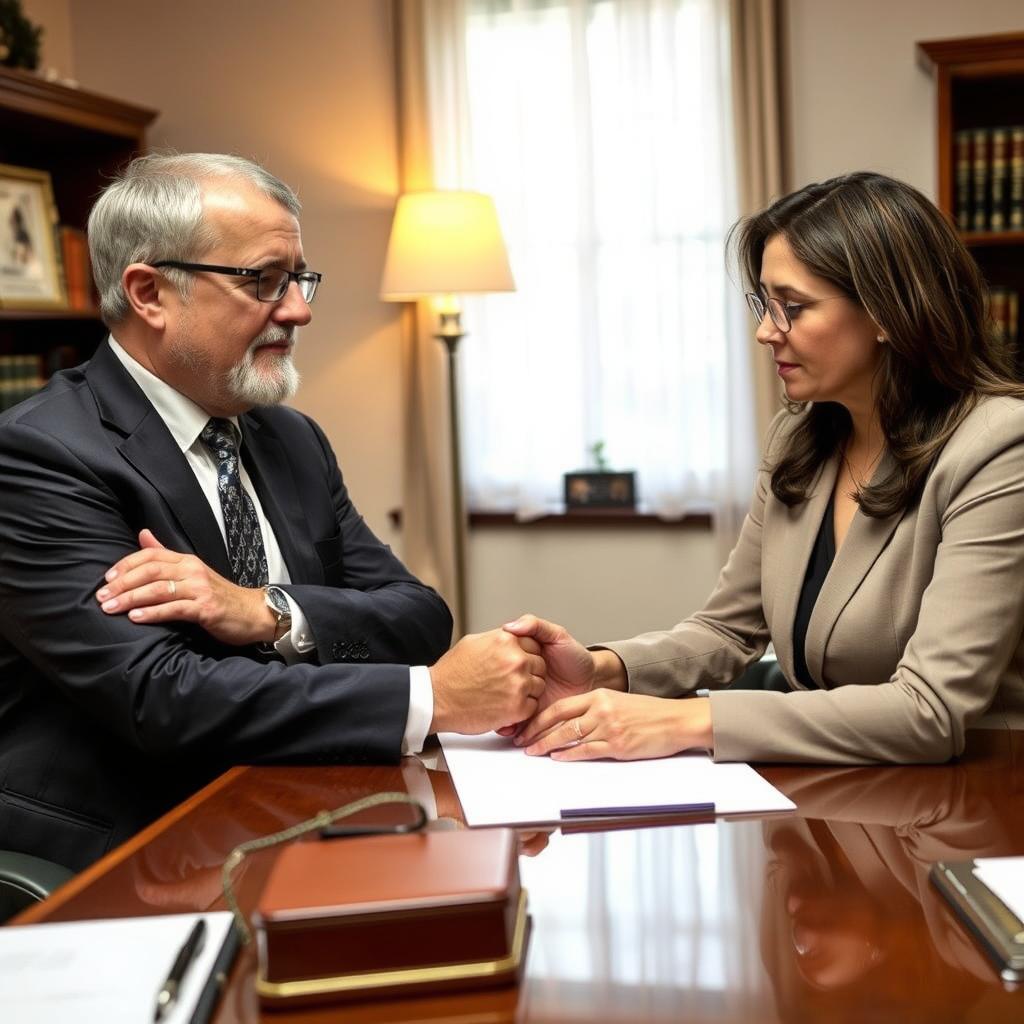
Adultery Divorce Lawyer Fairfax, VA
The day you discover evidence of a spouse’s infidelity, the ground beneath you shifts. You are hurt, angry, and uncertain what happens next. In Fairfax, Virginia, adultery is not just a private wound—it is a recognized legal ground for divorce that can alter property division, spousal support, and even parenting arrangements. Unlike a no‑fault separation, adultery permits you to file immediately without the mandatory waiting period under Virginia Code § 20‑91(1). If you are facing divorce where adultery is alleged or you need to prove it, you need counsel who knows the Fairfax County Circuit Court and the Juvenile and Domestic Relations District Court and who can navigate the fault‑ground process with discretion and skill. Mr. Sris, a former prosecutor, founded Law Offices Of SRIS, P.C. in 1997. Together with his Of Counsel team, he represents individuals throughout Fairfax County, Fairfax City, and Northern Virginia. Call (888) 437‑7747 to schedule a confidential consultation. Law Offices Of SRIS, P.C. – Advocacy Without Borders.
What Adultery Divorce Means in Fairfax
In Fairfax, an adultery‑based divorce is a fault‑ground proceeding filed in the Circuit Court. Because the Commonwealth is an equitable distribution state under Va. Code § 20‑107.3, proving adultery can influence how the court divides marital property and whether a spouse receives or pays support. The court considers multiple factors, and evidence of marital misconduct is one of them. No statutory waiting period applies—once you have proof of adultery and meet the six‑month residency requirement under § 20‑97, the case may proceed.
Cases are heard at the Fairfax County Circuit Court, located at 4110 Chain Bridge Road, Fairfax, VA 22030. If minor children are involved and custody or support is disputed, the Juvenile and Domestic Relations District Court may also become involved for temporary orders. Even if both parties eventually agree on a settlement, the initial filing and the evidentiary demands of a fault ground require careful preparation. A property settlement agreement can resolve the issues without trial, but only after thorough investigation and negotiation. Mr. Sris and his Of Counsel appear regularly in Fairfax courts and understand how local procedures interact with Virginia’s equitable distribution framework.
How Mr. Sris and His Of Counsel Handle Adultery Divorce Cases
When you meet with Mr. Sris and his Of Counsel, the first conversation focuses on your unique situation. You will discuss what evidence you have, what you hope to accomplish, and how the process works. Because adultery can be difficult to prove, the team works with licensed private investigators and forensic experts to gather admissible documentation—digital communications, financial records, testimony—while protecting your privacy.
From there, the firm develops a strategy. If the evidence is strong, they may file the complaint promptly and request pendente lite relief for temporary support or custody. If the other spouse contests the allegation, the matter may proceed to discovery and trial. Throughout, Mr. Sris and his Of Counsel handle each step with a focus on achieving a fair resolution. Many cases resolve through negotiation, but if trial is necessary, the trial‑tested background of the team provides an important advantage. The goal is always to guide you through the legal process while protecting your interests and preserving your peace of mind.
About Mr. Sris and His Of Counsel Team
Mr. Sris, Owner and Founder of Law Offices Of SRIS, P.C., has practiced since 1997. He is a former prosecutor and understands how cases are built and challenged from both sides. He has testified before the Virginia House Courts of Justice Committee in support of 2019 HB 635 (chief patron Del. David Bulova). Mr. Sris is admitted in Virginia, Maryland, the District of Columbia, New Jersey, and New York.
His Of Counsel team brings extensive combined legal experience. Each lawyer is engaged through Excella and works collaboratively with Mr. Sris on family law matters. Together, they have handled divorce, custody, support, and property division cases across Northern Virginia. Their collective knowledge of Fairfax court procedures, from the Circuit Court to the J&DR District Court, means your case benefits from practical local insight.
Frequently Asked Questions
What is adultery divorce in Virginia?
Adultery divorce in Virginia is a fault‑ground proceeding under Va. Code § 20‑91(1) that allows a spouse to file for divorce without a separation waiting period. Unlike no‑fault divorce, which requires six months or one year of separation, adultery permits immediate filing once the ground is established. The person alleging adultery must present clear and convincing evidence—mere suspicion is not enough. If proven, adultery can affect property division and spousal support in the Fairfax County Circuit Court.
How does adultery affect property division in Fairfax?
Virginia courts consider marital misconduct, including adultery, as one of the factors under Va. Code § 20‑107.3 when dividing marital property equitably. While equitable distribution does not mean a 50‑50 split, proof that a spouse committed adultery may result in the innocent spouse receiving a larger share of the marital estate. The court weighs the contribution of each party to the marriage, the circumstances experienced to its dissolution, and other listed factors. An experienced attorney can help you present evidence that demonstrates how adultery impacted the marriage.
Do I need a lawyer for an adultery divorce in Fairfax?
You are not required by law to hire a lawyer, but because adultery is a fault ground that must be proven in court, representation by an experienced family law attorney is strongly advised. Gathering admissible evidence, navigating discovery, and meeting the heightened evidentiary standard can be challenging without legal training. In Fairfax County Circuit Court, procedural missteps can delay your case or weaken your position. Mr. Sris and his Of Counsel handle every stage of the process, from investigation to final decree. For a confidential consultation, call (888) 437‑7747.
What happens if adultery is falsely alleged against me?
If you have been falsely accused of adultery in a Fairfax divorce, you are entitled to challenge the allegations and demand strict proof. The spouse making the claim must produce clear and convincing evidence. If they cannot, the court will not treat the accusation as a fault ground. You may also contest any negative influence the allegation might have on custody or support. Mr. Sris and his Of Counsel defend clients against unfounded fault accusations by scrutinizing the evidence and holding the other party to their burden of proof.
Is adultery a crime in Virginia?
Adultery remains a misdemeanor under Virginia Code § 18.2‑365, though criminal prosecution is rare. In modern practice, adultery is primarily litigated as a civil fault ground in divorce proceedings rather than as a criminal offense. The practical impact for you is in the family court, where an adultery finding can affect property division and support. If you are concerned about criminal exposure, speak directly with Mr. Sris about your situation. The firm handles divorce and family law matters and can address any related concerns.
How do I prove adultery in a Fairfax divorce?
Proving adultery in Virginia requires direct or circumstantial evidence that clearly and convincingly shows the spouse engaged in sexual intercourse outside the marriage. Common types of evidence include admissions, witness testimony, hotel receipts, digital communications, and photographs. An attorney can work with private investigators and forensic experts to gather documentation that meets the court’s standard. Because the burden is high, careful case preparation is essential. Contact Law Offices Of SRIS, P.C. at (888) 437‑7747 to discuss what evidence may be available in your situation.
Virginia legal resources:
Virginia Code Title 20 – Domestic Relations |
Fairfax County Circuit Court |
Virginia Judicial System
Attorney advertising. Prior results do not guarantee a similar outcome.
Case results depend on a variety of factors unique to each case.
Results may vary.