
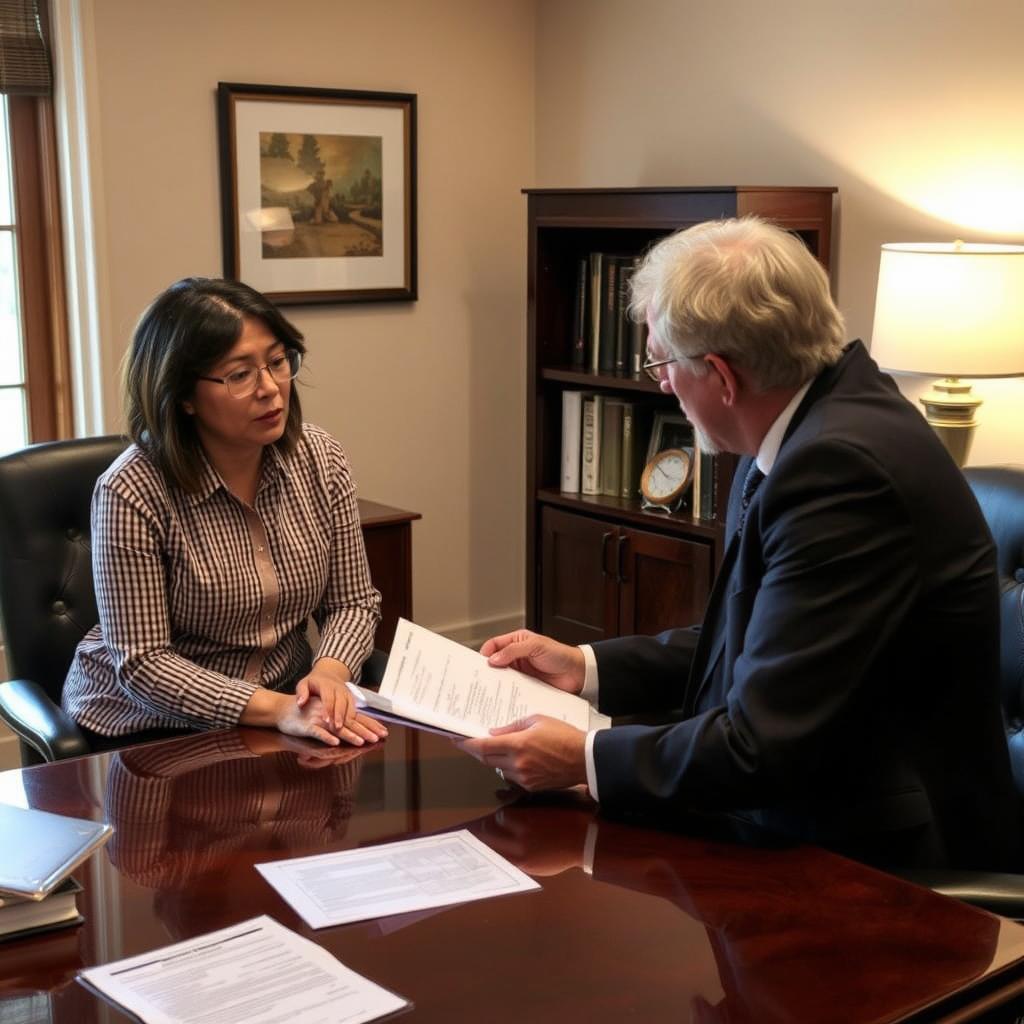
Marital Property Lawyer Loudoun County, VA
Virginia law divides property between spouses under an equitable distribution framework established by Va. Code § 20‑107.3. For couples in Loudoun County, identifying what is marital property—and what is separate property—can be one of the most consequential steps in a divorce or separation. Real estate, retirement accounts, business interests, stock options, and personal belongings acquired during the marriage are generally marital, while gifts and inheritances received by one spouse alone are usually separate. The Loudoun County Circuit Court, located at 18 East Market Street in Leesburg, has exclusive jurisdiction over divorce and equitable distribution, and the court weighs eleven statutory factors to reach a fair division that is not necessarily equal. Working with an experienced Virginia family law attorney early can help protect assets and clarify obligations. To request a consultation about marital property matters in Loudoun County, contact Law Offices Of SRIS, P.C. at (888) 437‑7747. Law Offices Of SRIS, P.C. – Advocacy Without Borders.
What Marital Property Means in Loudoun County, Virginia
Virginia is an equitable distribution state, not a community property state. That means a judge divides marital assets fairly after considering factors such as each spouse’s contributions to the marriage, the duration of the marriage, the ages and health of both parties, and the circumstances that led to the divorce—not by a simple 50‑50 split. The Loudoun County Circuit Court is the court that decides property division when spouses cannot agree. For matters involving custody or support alone, the Loudoun County Juvenile and Domestic Relations District Court may also handle related issues, but the divorce and equitable distribution case remains in the Circuit Court.
Loudoun County is part of the Twentieth Judicial District, a fast‑growing region with a mix of long‑time residents, commuter professionals, and military families. The local docket regularly includes cases with significant real estate holdings, business valuations, and retirement accounts earned over long careers. The court encourages parties to resolve property disputes through a written separation agreement when possible. If an agreement is reached, the court will review it for fairness before incorporating it into the final decree. For families throughout Ashburn, Leesburg, Sterling, Purcellville, South Riding, Brambleton, and surrounding communities, resolving marital property questions requires careful financial analysis and solid understanding of Virginia’s equitable distribution factors.
Marital property disputes in Loudoun County often involve detailed financial records. Forensic accountants and business valuation professionals may be engaged to assess the value of a family business, a professional practice, or complex investment portfolios. Retirement accounts—including 401(k)s, IRAs, and government pensions—are frequently at issue, and the court may enter a qualified domestic relations order (QDRO) to divide such assets. Because property acquired before the marriage or received as a gift or inheritance is presumptively separate, tracing funds and proving the character of assets can be critical. The firm’s Ashburn location serves clients throughout Loudoun County, and our attorneys regularly appear in the Circuit Court at 18 East Market Street.
How Mr. Sris and the Firm’s Of Counsel Attorneys Handle Marital Property Cases
Mr. Sris and the firm’s Of Counsel attorneys begin each matter by gathering a complete picture of the marital estate. That means identifying all assets and debts—real estate, bank and investment accounts, vehicles, business interests, retirement funds, and personal property—and determining whether each item is marital or separate under Virginia law. Counsel then works with clients to set realistic goals for property division, considering the eleven factors the court will examine, the tax consequences of different distribution options, and the likely cost and duration of litigation versus settlement.
When spouses are willing to cooperate, the firm’s approach focuses on negotiation and drafting a comprehensive property settlement agreement that addresses the division of assets, responsibility for debts, spousal support, and any other financial issues. A well‑drafted agreement can avoid trial and provide certainty. If negotiation does not succeed, Mr. Sris and the firm’s Of Counsel attorneys are prepared to advocate in the Loudoun County Circuit Court. They work with financial professionals to present the value of complex assets and to challenge valuations that do not reflect the true worth of the marital estate. The timeline for resolution depends on court scheduling and the complexity of the estate; straightforward matters may conclude more quickly, while contested cases with business valuations or disputed separate‑property claims can require several months or longer.
About Mr. Sris and the Firm’s Of Counsel Attorneys
Mr. Sris is Owner and Founder of Law Offices Of SRIS, P.C. A former prosecutor, he has practiced in Virginia since 1997 and is admitted in Virginia, Maryland, the District of Columbia, New Jersey, and New York. Mr. Sris testified before the Virginia House Courts of Justice Committee in support of 2019 HB 635 (chief patron Del. David Bulova). His experience in the courtroom and his familiarity with Virginia’s equitable distribution statute help him guide clients through the financial aspects of divorce.
Mr. Sris works alongside the firm’s Of Counsel attorneys, all of whom bring extensive legal experience to family law matters. Together, Mr. Sris and the firm’s Of Counsel attorneys have documented case results across Virginia, including favorable outcomes in Loudoun County. Results may vary. in any individual matter. The firm’s Ashburn location provides convenient service to clients in Leesburg, Sterling, Ashburn, Purcellville, and the surrounding communities. To request a consultation, call (888) 437‑7747.
Frequently Asked Questions
How is marital property different from separate property in Virginia?
Marital property is generally anything acquired during the marriage, while separate property belongs to one spouse alone. Under Va. Code § 20‑107.3, property obtained by either spouse during the marriage is presumed marital unless it came from a gift or inheritance to that spouse alone. Separate property also includes assets owned before the marriage, provided they have not been commingled with marital funds. The court classifies each asset and then divides the marital estate equitably, not necessarily equally, based on the statutory factors.
What factors does the Loudoun County court consider when dividing marital property?
The court evaluates eleven statutory factors listed in Va. Code § 20‑107.3(E). Those factors include each spouse’s contributions to the well‑being of the family, the duration of the marriage, the age and physical condition of the parties, the circumstances that led to the divorce, the value and nature of the assets, the debts of each party, tax consequences, and any other factor the court considers relevant. The judge has broad discretion to reach an equitable outcome that accounts for the particular facts of the case.
Can a separation agreement resolve property division without going to court?
Yes, a written separation agreement signed by both spouses can settle all property, support, and debt issues. In Loudoun County, many divorces are finalized on no‑fault grounds after a period of separation and the execution of a property settlement agreement. The agreement must be in writing and signed by both parties. The Circuit Court will review it for fairness, especially if one spouse was unrepresented, but when properly drafted an agreement can avoid litigation and give the parties control over the outcome.
How does the firm handle complex marital assets such as businesses or retirement accounts?
The firm engages forensic accountants and business valuation professionals when necessary to establish the value of complex assets. For a family business, partnership interest, or professional practice, an accurate valuation is essential to equitable distribution. Retirement accounts—including 401(k)s, IRAs, and federal or state pensions—often require a qualified domestic relations order (QDRO) to divide the marital share without triggering penalties. Mr. Sris and the firm’s Of Counsel attorneys coordinate with the attorneys and prepare the documentation needed to present a clear picture of the marital estate to the court or to the other side during settlement discussions.
Do I need a lawyer to handle marital property division in Loudoun County?
While you are not legally required to have a lawyer, the financial implications of property division make legal guidance valuable. The Virginia equitable distribution scheme involves detailed factual and legal analysis; mistakes in classifying assets or in drafting a separation agreement can have long‑term consequences. An experienced family law attorney can identify all assets, determine their character, work toward a fair settlement, and, if necessary, advocate before the Loudoun County Circuit Court. To discuss your specific situation, contact Law Offices Of SRIS, P.C. at (888) 437‑7747.
How long does a typical marital property case take in Loudoun County?
The timeline varies based on whether the case is contested and the complexity of the estate. An uncontested matter with a signed separation agreement can be resolved in a matter of months after the required separation period. Contested cases with disputes over business valuations, retirement assets, or separate‑property claims often take significantly longer, depending on court scheduling and the extent of discovery. Mr. Sris and the firm’s Of Counsel attorneys work to move cases forward efficiently while protecting the client’s financial interests.
Related family law resources for nearby communities: Fairfax County Family Law · Prince William County Family Law · Stafford County Family Law · Fauquier County Family Law · Arlington County Family Law
For reference, consult official Virginia legal sources: Virginia Code Title 20 (Domestic Relations) · Virginia Judicial System · Virginia Circuit Courts
Attorney advertising. Prior results do not guarantee a similar outcome. Results may vary.
Case results depend on a variety of factors unique to each case.