
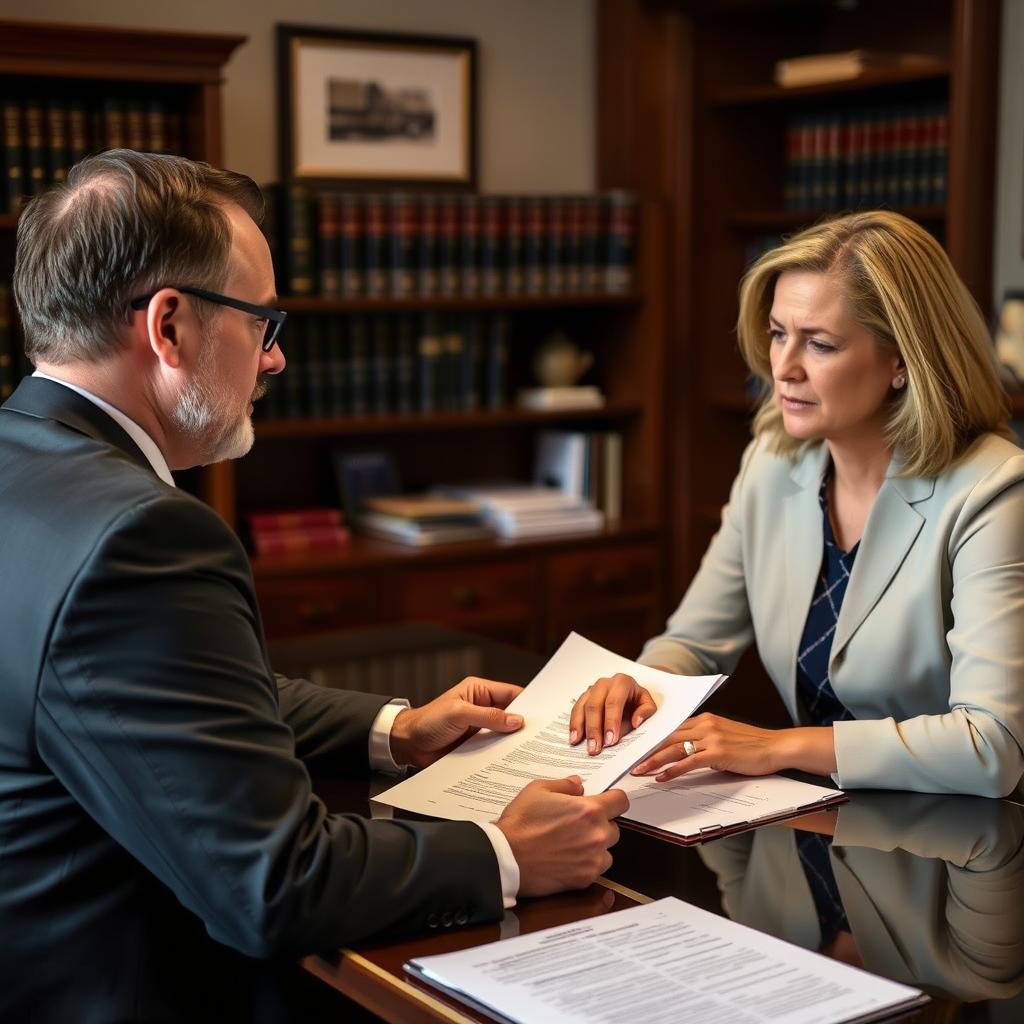
Marital Property Lawyer Falls Church, VA
When the division of marital property becomes the central issue in your divorce, knowing what you own, what you owe, and how a Falls Church court is likely to treat each asset changes everything. You and your spouse may have built a life around a home near West Falls Church Metro, retirement accounts accrued during long careers along Route 7, or a business launched in the shadow of Eden Center. Identifying and valuing those assets under Virginia law is the first step toward a fair settlement—and it is never as simple as splitting everything down the middle. Mr. Sris and the firm’s Of Counsel attorneys represent individuals in Falls Church, Virginia, in matters involving equitable distribution, business interests, real estate, pensions, and all forms of marital property. For a confidential consultation about your situation, call (888) 437-7747.
Law Offices Of SRIS, P.C. – Advocacy Without Borders.
What Marital Property Means in Falls Church, Virginia
Virginia is an equitable distribution state, not a community property state. That means the Falls Church Circuit Court—which has exclusive jurisdiction over divorce and property division—divides marital property fairly but not necessarily equally. The statutory framework is Va. Code § 20-107.3, and it requires the court to classify all assets as either separate, marital, or hybrid before assigning a value to each. Family law matters in Falls Church that involve custody, support, or protective orders are heard in the Falls Church Juvenile and Domestic Relations District Court, while all divorce and equitable distribution proceedings are heard at the Falls Church Circuit Court, 300 Park Avenue, Suite 151W, Falls Church, VA 22046. Contact information for the clerk’s office is available through the Virginia judicial website.
Separate property is everything you owned before the marriage, plus any gifts or inheritances you received individually during the marriage. Marital property is everything else acquired by either spouse during the marriage, regardless of whose name is on the title. Commingling—depositing separate funds into a joint account or using marital labor to increase the value of a separate asset—can transform what started as separate property into marital property. Practitioners who regularly appear in the Seventeenth Judicial District understand that these classification disputes are often the most contested element of a Falls Church divorce, because classification drives the entire division. Getting it right from the beginning often saves months of litigation.
How Mr. Sris and the Firm’s Of Counsel Attorneys Handle Marital Property Cases
Equitable distribution in Virginia is fact-intensive. The statute lists eleven factors for the court to weigh: each spouse’s monetary and non‑monetary contributions, the duration of the marriage, the couple’s ages and health, how and when particular assets were acquired, the tax consequences of any proposed division, and several others. Mr. Sris and the firm’s Of Counsel attorneys work with forensic accountants, business valuators, and retirement-plan attorney to trace assets, identify hidden or undervalued property, and present the court with a comprehensive picture of the marital estate. The goal is a settlement that fairly reflects the reality of your finances—whether that means negotiating a marital settlement agreement or litigating the matter to trial.
The firm’s approach emphasizes early, thorough preparation. That includes gathering tax returns, account statements, deeds, business records, and any existing prenuptial or postnuptial agreements. In many cases, the parties are able to resolve property issues through a written separation agreement, which the court can incorporate into the final decree. When an agreement cannot be reached, Mr. Sris and the firm’s Of Counsel attorneys appear in the Falls Church Circuit Court to advocate for their client’s position. The timeline for resolution depends on the complexity of the assets, the degree of cooperation between the parties, and the court’s docket. Because Mr. Sris testified before the Virginia House Courts of Justice Committee in support of 2019 HB 635 (chief patron Del. David Bulova)—legislation that addressed procedural issues in the division of retirement plans under § 20-107.3(g)—the firm brings a distinctive, practice‑informed perspective to the technical questions that often arise in pension and QDRO matters.
About Mr. Sris and the Firm’s Of Counsel Attorneys
Mr. Sris, Owner and Founder of Law Offices Of SRIS, P.C., is a former prosecutor who has practiced since 1997. He is admitted to the bars of Virginia, Maryland, the District of Columbia, New Jersey, and New York, and he concentrates his practice on family law, complex civil litigation, and criminal defense. Mr. Sris testified before the Virginia House Courts of Justice Committee in support of 2019 HB 635 (chief patron Del. David Bulova)—a public-record credential that reflects his engagement with the statutes that govern equitable distribution in Virginia. The firm’s Of Counsel attorneys are experienced litigators who bring backgrounds in prosecution, law enforcement, and complex litigation to the table. Together, Mr. Sris and the firm’s Of Counsel attorneys collaborate on marital property cases in Falls Church, from the initial property classification analysis through final hearing.
The firm serves clients throughout Northern Virginia from its Fairfax Location, conveniently accessible to Falls Church residents. Consultations are by appointment, and phones are answered during business hours at (888) 437-7747. For Spanish-language assistance, the firm offers consultations in Spanish. To discuss the specifics of a marital property division in Falls Church, call (888) 437-7747 or visit the firm’s main website to learn more about the full scope of its family law practice.
Frequently Asked Questions
Is Virginia a community property state?
No, Virginia is an equitable distribution state—property is divided fairly, not necessarily equally. The Falls Church Circuit Court applies the 11 statutory factors listed in Va. Code § 20-107.3 to determine how to divide marital property. Separate property (assets owned before the marriage or received by gift or inheritance) is not divided. The distinction between marital and separate property is often the most crucial dispute in a Falls Church divorce. For a case‑specific analysis, contact the firm at (888) 437-7747.
What counts as marital property in a Falls Church divorce?
Marital property generally includes everything acquired by either spouse during the marriage, regardless of how the asset is titled. This includes wages, real estate purchased during the marriage, retirement accounts built during the marriage, business interests, and debts. Separate property brought into the marriage may become marital if it is commingled with joint funds. The classification is fact‑sensitive, and an experienced family law attorney can evaluate your specific situation. For guidance tailored to your circumstances, reach Law Offices Of SRIS, P.C. at (888) 437-7747.
How are retirement accounts divided in a Falls Church divorce?
Retirement assets are treated as marital property to the extent they were accumulated during the marriage. The court may order a division through a Qualified Domestic Relations Order (QDRO) or similar mechanism. The process requires careful attention to plan rules and tax consequences—the very issues Mr. Sris’s legislative testimony on HB 635 was designed to address. An attorney can help ensure that a division is correctly documented and does not trigger unintended penalties.
Can a marital settlement agreement resolve property issues without going to court?
Yes, parties can resolve all property, support, and custody issues through a signed written marital settlement agreement. If the agreement is fair and entered into voluntarily, the Falls Church Circuit Court can incorporate its terms into the final divorce decree, avoiding a contested trial. The firm assists clients in drafting and negotiating these agreements. To discuss whether a settlement agreement is feasible in your case, call (888) 437-7747.
What if my spouse is hiding assets?
Concealment of assets is serious and can affect the division of property. An experienced attorney works with forensic accountants to trace undisclosed accounts, undervalued business interests, and transferred assets. Discovery tools such as subpoenas and interrogatories are used to obtain full financial disclosure. If the court finds that a spouse intentionally concealed assets, it may adjust the distribution accordingly. Contact the firm to discuss your concerns.
Do I need a lawyer to divide marital property in Falls Church?
While you are not required to have a lawyer, equitable distribution involves legal and financial complexities that can affect your future for years. An attorney can identify all relevant assets, argue for classification that protects your interests, and negotiate a settlement or litigate as needed. Mistakes made early in the process can be difficult to undo. For a consultation with Mr. Sris or the firm’s Of Counsel attorneys, call (888) 437-7747.
Related pages:
Family Law Lawyer Fairfax County |
Family Law Lawyer Fairfax (City) |
Family Law Lawyer Prince William County |
Family Law Lawyer Manassas (City) |
Family Law Lawyer Manassas Park (City)
Primary legal resources—Virginia family law:
Virginia Code Title 20 (Domestic Relations) |
Virginia’s Judicial System
Attorney advertising. Prior results do not guarantee a similar outcome.
Case results depend on a variety of factors unique to each case.
Results may vary.