
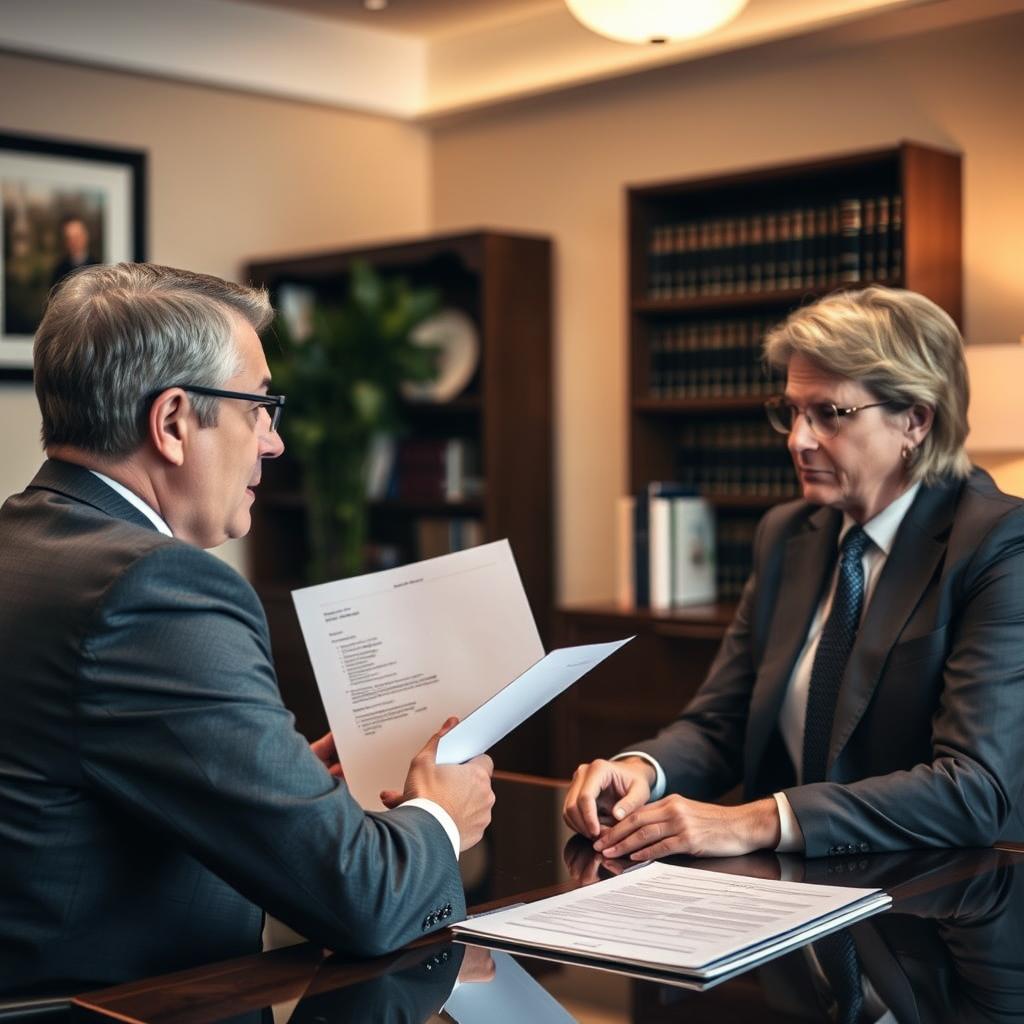
Postnuptial Agreement Lawyer Loudoun County, VA
Couples in Loudoun County often think of prenuptial agreements—but fewer realize that Virginia law also permits postnuptial agreements, which are marital contracts executed after a marriage has already begun. A postnuptial agreement can address property classification, spousal support, the division of assets acquired during the marriage, and other financial rights. For residents of Ashburn, Leesburg, Sterling, South Riding, Brambleton, and surrounding communities, these agreements must comply with the Virginia Premarital Agreement Act, codified at Va. Code § 20-147 et seq., and are subject to enforcement in the Loudoun County Circuit Court. Whether you are entering a postnuptial agreement to protect a business, to clarify financial expectations during the marriage, or to resolve disagreements about property before a potential separation, working with an experienced family law attorney helps ensure the document reflects your intentions and meets the statutory requirements. At Law Offices Of SRIS, P.C., Mr. Sris and his Of Counsel bring extensive combined legal experience to postnuptial agreement matters in Loudoun County. Call (888) 437-7747 to schedule a consultation. Law Offices Of SRIS, P.C. – Advocacy Without Borders.
What Postnuptial Agreements Mean in Loudoun County
A postnuptial agreement, sometimes called a postmarital agreement or a marital agreement, is a contract between spouses that defines their respective property rights and financial obligations. In Virginia, these agreements are governed by the same statutory framework as prenuptial agreements—the Premarital Agreement Act—and the enforceability of a postnuptial agreement depends on whether it was entered into voluntarily, with full financial disclosure, and without unconscionability. Loudoun County Circuit Court, located at 18 East Market Street in Leesburg, has jurisdiction over the enforcement and adjudication of postnuptial agreements in the context of divorce, equitable distribution, or spousal support proceedings. Because Loudoun County is within Virginia’s Twentieth Judicial Circuit, the court applies Virginia equitable distribution principles under Va. Code § 20-107.3, and a valid postnuptial agreement can override the default statutory scheme for property division. The agreement can also address the waiver or modification of spousal support, which is otherwise governed by the factors in Va. Code § 20-107.1, giving couples control over their financial futures.
Loudoun County’s rapid growth and its concentration of technology, government-contracting, and professional households mean that many couples hold complex assets—business interests, stock options, retirement accounts, and real estate holdings that have appreciated significantly. A postnuptial agreement provides clarity and protects separate property from being reclassified as marital property under the equitable-distribution factors. The Ashburn location of Law Offices Of SRIS, P.C. is positioned to serve clients throughout Loudoun County, including Leesburg, Purcellville, Aldie, Hamilton, Middleburg, and Round Hill. Our attorneys appear in the Loudoun County Circuit Court and are familiar with local procedures for presenting and defending postnuptial agreements, whether in an uncontested divorce setting or as part of a contested equitable-distribution dispute.
How Mr. Sris and His Of Counsel Handle Postnuptial Agreement Cases
Drafting a postnuptial agreement requires more than filling in a template. Each spouse should have independent legal representation to avoid a later finding that the agreement was involuntary or the product of overreaching. At Law Offices Of SRIS, P.C., Mr. Sris and his Of Counsel frequently represent one party in the negotiation and drafting of a postnuptial agreement. The process typically begins with a consultation to understand the couple’s goals, the nature of their assets, and any existing marital tensions. From there, the attorney prepares a draft agreement that identifies each asset as separate or marital, allocates future appreciation or income, and addresses spousal support waivers or limitations. If the other spouse has counsel, the agreement is negotiated and revised until both parties are satisfied. If a dispute arises later and the agreement is challenged in court—for example, on grounds of duress, fraud, or unconscionability—the firm litigates the enforceability of the agreement before the Loudoun County Circuit Court judge.
When a divorce has already been filed and a postnuptial agreement exists, Mr. Sris and his Of Counsel present the agreement as part of the equitable-distribution phase. They work with forensic accountants or business-valuation attorneys when necessary, and they argue the agreement’s terms under the standards set forth in Va. Code § 20-151, which governs the enforcement of premarital and postnuptial agreements. The approach is methodical: review the circumstances of execution, assess disclosure, compare the agreement’s provisions with what the default statutory division would be, and present the agreement as a binding contract. Throughout this process, clients are kept informed of the timeline, which depends on the court’s calendar and the complexity of the assets. For straightforward matters, an agreement can be finalized within a few weeks; contested litigation may extend over several months.
About Mr. Sris and the Firm’s Of Counsel Attorneys
Mr. Sris is Owner and Founder of Law Offices Of SRIS, P.C., which has been practicing since 1997. A former prosecutor, Mr. Sris is admitted to practice in Virginia, Maryland, the District of Columbia, New Jersey, and New York. His multi-state admission allows the firm to handle postnuptial agreements that involve cross-jurisdictional assets—for instance, when one spouse owns property in Maryland or the District of Columbia in addition to the family home in Loudoun County. Mr. Sris testified before the Virginia House Courts of Justice Committee in support of 2019 HB 635 (chief patron Del. David Bulova). The firm’s Of Counsel attorneys bring additional perspectives and decades of trial and negotiation experience. Together, Mr. Sris and his Of Counsel have extensive combined legal experience. Results may vary.
The firm’s Ashburn location serves clients in all corners of Loudoun County. Meetings are by appointment, and consultations are available to discuss your postnuptial agreement. Each matter is handled with the attention that complex marital contracts demand, and the firm’s attorneys are experienced in both collaborative negotiation and courtroom advocacy when disputes arise. For more information about the firm’s family law practice, you can review the biography of Mr. Sris and the Of Counsel attorneys on the firm’s website. To reach the firm, call (888) 437-7747. The Ashburn location is at 20130 Lakeview Center Plaza, Room 403, Ashburn, VA 20147. By appointment only.
Frequently Asked Questions
What is a postnuptial agreement in Virginia?
A postnuptial agreement is a contract between spouses, executed after marriage, that defines property rights and financial obligations upon separation, divorce, or death. Under the Virginia Premarital Agreement Act, a postnuptial agreement is enforceable if it is in writing, signed by both parties, and entered into voluntarily with a fair and reasonable disclosure of each spouse’s financial circumstances. The agreement can modify the default equitable-distribution rules and spousal-support factors that would otherwise apply in a divorce. In Loudoun County, enforcement or challenges to such agreements are heard in the Circuit Court.
Are postnuptial agreements enforceable in Virginia?
Yes, a postnuptial agreement is enforceable in Virginia if it meets the statutory requirements of Va. Code § 20-151. The agreement must be entered into voluntarily and not be unconscionable when executed. A court will also consider whether each party was provided a fair and reasonable disclosure of the other’s property and financial obligations, and whether each party had an opportunity to consult with independent legal counsel. If a spouse later claims duress, fraud, or material nondisclosure, the agreement can be set aside. The Loudoun County Circuit Court applies these standards when a postnuptial agreement is challenged during a divorce or annulment.
What can a postnuptial agreement cover?
A postnuptial agreement in Virginia can address the classification and division of property (including business interests and retirement accounts), the amount and duration of spousal support, and the disposition of assets upon death. It can also specify that certain assets acquired during the marriage remain the separate property of the acquiring spouse, or that income from separate property is not marital. The agreement may not, however, determine child custody or child support; those issues remain governed by the trusted-interest-of-the-child standard and the Virginia child-support guidelines, irrespective of any parental agreement.
Can a postnuptial agreement be challenged in Loudoun County?
Yes, a spouse may challenge a postnuptial agreement in Loudoun County Circuit Court on grounds such as involuntariness, lack of financial disclosure, unconscionability, duress, or fraud. The burden of proof rests on the party seeking to invalidate the agreement. Courts in Loudoun County examine the circumstances surrounding the signing, the parties’ relative sophistication, and whether each spouse had adequate time to review and consult with counsel. In a contested divorce, the validity of the agreement becomes a threshold issue that must be resolved before equitable distribution can proceed. Mr. Sris and his Of Counsel have litigated such challenges and are experienced in both defending and attacking postnuptial agreements.
Do I need a lawyer for a postnuptial agreement in Loudoun County?
You are not legally required to hire a lawyer to create a postnuptial agreement, but independent legal representation is strongly recommended to ensure the agreement is enforceable and reflects your intentions. Because Virginia law provides that each party has the right to have separate counsel, an agreement negotiated without independent advice is more vulnerable to a later challenge. An attorney can identify hidden tax consequences, protect separate-property claims, and draft terms that will survive a court’s scrutiny. For a consultation about your postnuptial agreement in Loudoun County, reach Law Offices Of SRIS, P.C. at (888) 437-7747.
How do I get started with a postnuptial agreement in Loudoun County?
The first step is to schedule a consultation with a family law attorney who practices in Loudoun County. Bring a list of your assets and debts, any existing estate planning documents, and, if relevant, a general sense of your spouse’s financial situation. The attorney will explain the requirements under the Virginia Premarital Agreement Act, suggest provisions that align with your goals, and discuss how the agreement would interact with Virginia’s equitable-distribution and spousal-support statutes. From there, you and the attorney can decide whether to proceed with drafting and negotiation. For a consultation, reach Mr. Sris and his Of Counsel at (888) 437-7747.
Additional Family Law Resources in Northern Virginia:
Fairfax County Family Law •
Prince William County Family Law •
Stafford County Family Law •
Fauquier County Family Law •
Arlington County Family Law
Primary Legal Sources:
Virginia Premarital Agreement Act (Va. Code § 20-147 et seq.) •
Loudoun County Circuit Court
Attorney advertising. Prior results do not guarantee a similar outcome. Case results depend on a variety of factors unique to each case. Results may vary.