
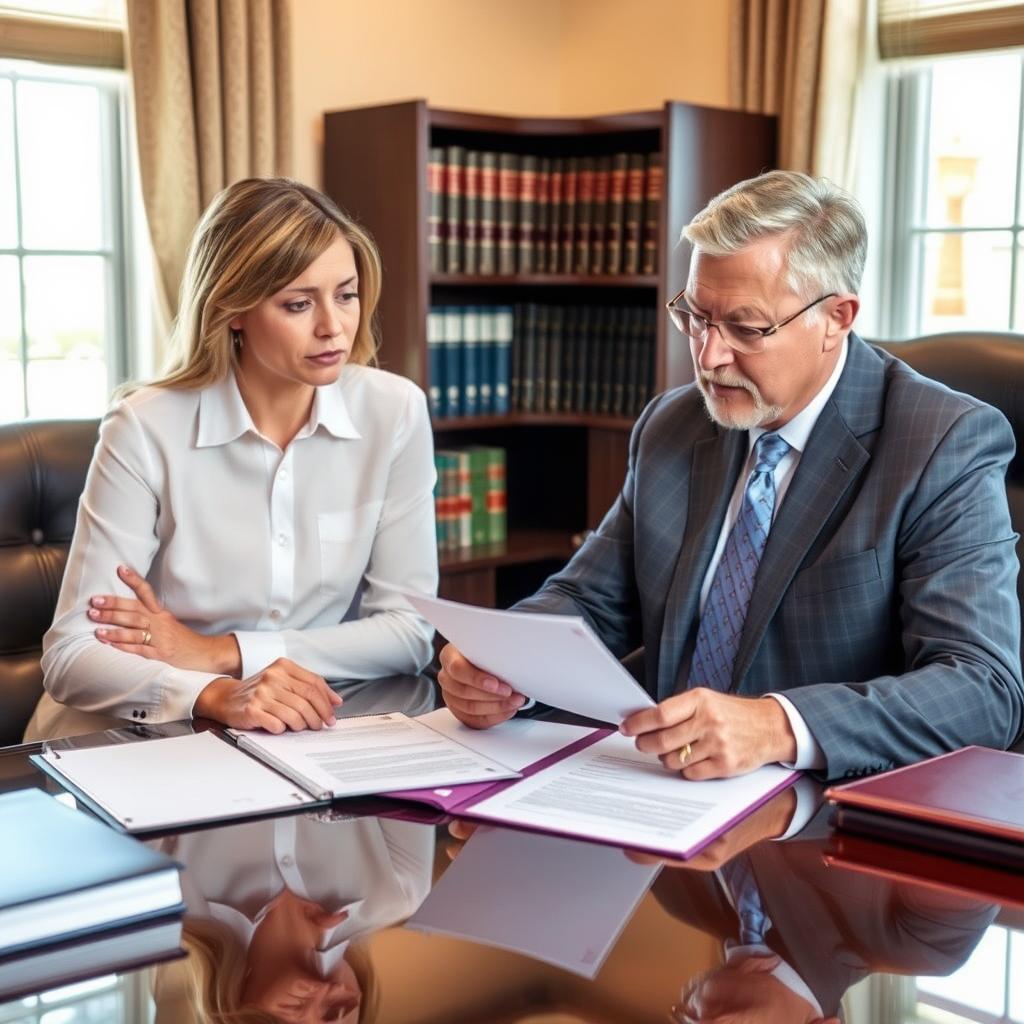
Postnuptial Agreement Lawyer Fairfax County, VA
You are married, and you and your spouse have built a life together. As your circumstances change—perhaps a business venture, an inheritance, or the arrival of children—you may begin to think about how your financial rights and obligations would be handled if something happened to your marriage. A postnuptial agreement can provide that clarity. It is a legal document signed after marriage that defines how assets, debts, and spousal support would be handled in the event of divorce or separation. Drafting one that will hold up under Virginia law, however, requires a careful understanding of both the statutory framework and the local court practices in Fairfax County. Law Offices Of SRIS, P.C. is a multi-state firm with a presence in Fairfax County that concentrates part of its practice on family law matters, including postnuptial agreements. To discuss your situation with Mr. Sris, Owner and Founder of the firm, or the firm’s Of Counsel attorneys, call (888) 437-7747. Law Offices Of SRIS, P.C. – Advocacy Without Borders.
What Postnuptial Agreements Mean in Fairfax County, Virginia
In Virginia, postnuptial agreements are governed by the Premarital Agreement Act, Va. Code § 20‑147 et seq. Although the statute uses the word “premarital,” its provisions also apply to agreements executed after marriage. A postnuptial agreement can address property division, spousal support, the management of household expenses, and other financial matters. Virginia is an equitable distribution state, which means a judge divides marital property fairly but not necessarily equally. A properly drafted postnuptial agreement can override the default equitable distribution rules, giving couples more control over their financial future.
In Fairfax County, matters involving postnuptial agreements are generally heard in the Fairfax County Circuit Court, the court with jurisdiction over divorce and equitable distribution. The court will examine the agreement for voluntariness, fairness, and full disclosure of assets. Although mediation is not mandatory, many couples use it to reach mutually acceptable terms. Our Fairfax location assists clients in navigating these procedural expectations. Because the effectiveness of an agreement often depends on the specific facts of each case, working with counsel who are familiar with the local bench and the relevant statutory factors can be an important part of the process.
How Mr. Sris and the Firm’s Of Counsel Attorneys Handle Postnuptial Agreement Matters
Mr. Sris and the firm’s Of Counsel attorneys take a structured, client-centered approach to postnuptial agreement matters. The first step is a consultation in which your goals are discussed in detail—whether the agreement is meant to protect a family business, safeguard an inheritance for children from a prior relationship, or simply create financial predictability. Next, the attorneys review the marital estate and help both parties disclose their assets and debts, a critical step for ensuring the agreement’s enforceability. Where both spouses are represented, the firm works toward terms that are equitable and transparent.
If the agreement is being negotiated outside of a divorce context, the team focuses on drafting language that addresses both current and foreseeable circumstances. If the agreement is later challenged during a divorce, Mr. Sris and the firm’s Of Counsel attorneys are prepared to defend its validity in Fairfax County Circuit Court. They also handle post-decree enforcement proceedings when a spouse fails to abide by the terms. Throughout the process, the attorneys work to protect your interests while maintaining open communication with you about the practical and legal considerations at every stage.
About Mr. Sris and the Firm’s Of Counsel Attorneys
Mr. Sris, Owner and Founder of Law Offices Of SRIS, P.C., has been practicing since 1997. A former prosecutor, Mr. Sris brings a courtroom perspective that informs his approach to family law matters, including negotiation and litigation of postnuptial agreements. He is admitted to practice in Virginia, Maryland, the District of Columbia, New Jersey, and New York. The firm’s Of Counsel attorneys contribute their own substantial experience in family law, property division, and equitable distribution matters. Mr. Sris and the firm’s Of Counsel attorneys bring extensive combined legal experience to the representation of clients in Fairfax County and throughout Northern Virginia. Results may vary.
Frequently Asked Questions
What is a postnuptial agreement in Virginia?
A postnuptial agreement is a written contract made between spouses after marriage that governs how assets, debts, and spousal support would be handled if the marriage ends. In Virginia, postnuptial agreements are treated much like prenuptial agreements under the Premarital Agreement Act. They allow couples to decide on financial arrangements outside the default equitable distribution rules. For an agreement to be enforceable, it must be entered into voluntarily, with full disclosure of each spouse’s financial circumstances, and must not be unconscionable. The Fairfax County Circuit Court is the venue where such agreements are typically reviewed during a divorce.
Do I need a lawyer to draft a postnuptial agreement in Fairfax County?
Virginia law does not require you to have a lawyer to create a postnuptial agreement, but working with an experienced attorney helps ensure the agreement complies with statutory requirements and will be given effect by a court. A lawyer can assist with disclosing assets fully, drafting clear and unambiguous terms, and avoiding provisions that could be deemed unenforceable. Because postnuptial agreements are often scrutinized more closely than prenuptial ones—since spouses already have a fiduciary relationship—having independent legal advice for each spouse is a common practice that can strengthen the agreement’s validity in Fairfax County courts.
Can a postnuptial agreement be modified after it is signed?
Yes, a postnuptial agreement can be modified or revoked if both spouses agree to the change in a subsequent writing that meets the same statutory requirements as the original agreement. Under Virginia law, modifications must be in writing and signed by both parties. Circumstances such as the sale of a business, receipt of an inheritance, or the birth of a child may prompt spouses to update their agreement. If one spouse later challenges the agreement, the court will consider whether the modification was voluntarily made and whether there was full and fair disclosure at the time of the amendment. Our firm assists with drafting and reviewing modifications to reflect changed circumstances.
What makes a postnuptial agreement invalid in Virginia?
A postnuptial agreement may be set aside if it was not entered into voluntarily, if there was a failure to fully disclose property and obligations, or if the agreement is unconscionable when signed. Because spouses owe each other a heightened duty of good faith and fair dealing, a one-sided agreement that results from overreaching, duress, or fraud will not be enforced. The Fairfax County Circuit Court will examine the facts surrounding execution, including whether each spouse had the opportunity to consult independent counsel. The burden of proving voluntariness and disclosure often falls on the party seeking to enforce the agreement, making careful preparation essential.
How does a Virginia court enforce a postnuptial agreement?
Enforcement of a postnuptial agreement generally occurs during a divorce proceeding, when one spouse asks the court to divide property or award spousal support according to the agreement’s terms. A party may file a motion in Fairfax County Circuit Court to enforce the agreement. The court will first determine whether the agreement meets the prerequisites of the Premarital Agreement Act. If the agreement is found valid, the judge will apply its terms instead of the default equitable distribution or spousal support factors. If a spouse refuses to comply after the divorce, enforcement may require a separate contempt or contract action. Our firm represents clients in both initial enforcement and post-decree compliance matters.
What happens if my spouse contests the postnuptial agreement during divorce?
If your spouse challenges the agreement, the court will hold a hearing to decide whether the agreement is enforceable under Virginia law. The spouse contesting the agreement must present evidence that the agreement was not voluntary, lacked full disclosure, or is otherwise unfair. The party seeking to enforce it will have the opportunity to present evidence to the contrary. The judge may consider testimony, financial documents, and the circumstances surrounding the signing. Depending on the court’s ruling, the agreement may be upheld in full, partially enforced, or set aside entirely. Mr. Sris and the firm’s Of Counsel attorneys have experience handling contested postnuptial agreement disputes in Fairfax County.
For guidance on your specific situation, reach Law Offices Of SRIS, P.C. at (888) 437-7747.
Related family law representation in nearby counties:
Attorney advertising. Prior results do not guarantee a similar outcome.
Case results depend on a variety of factors unique to each case.