
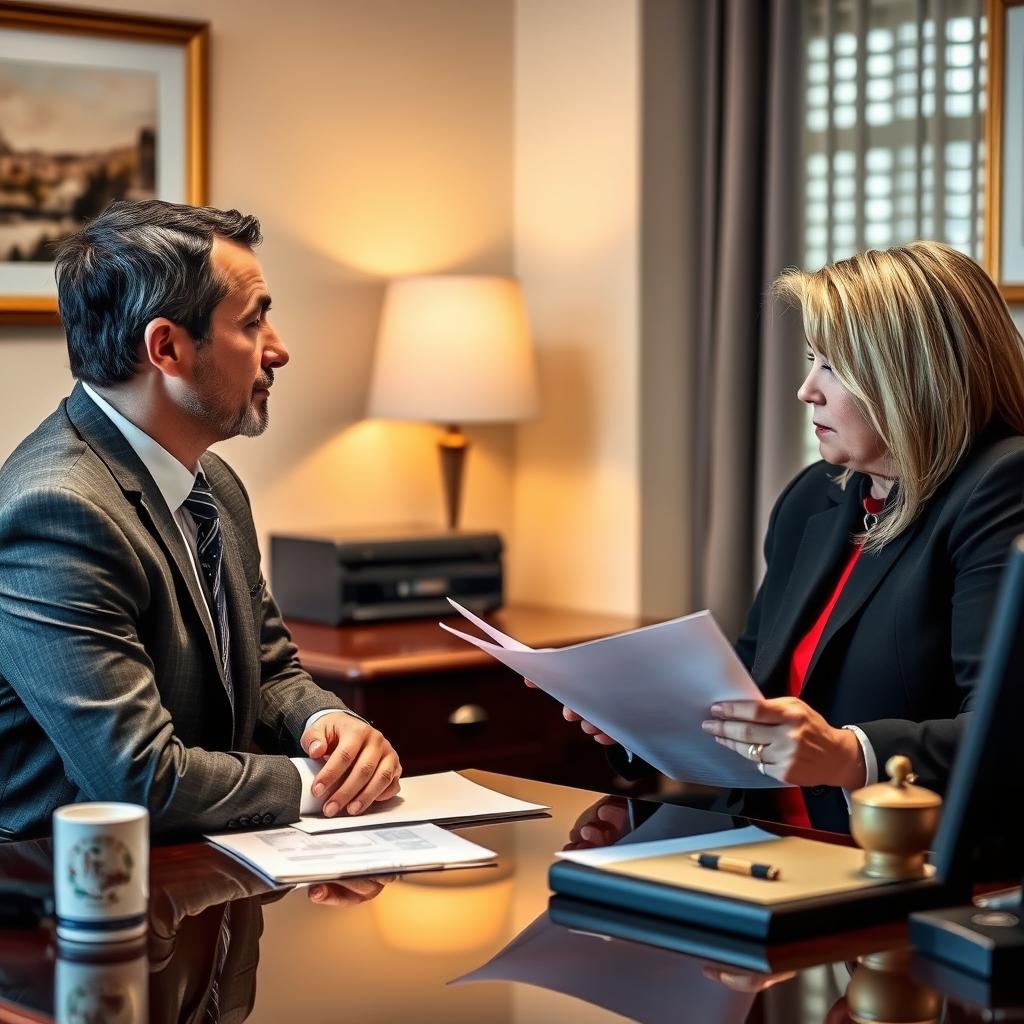
Divorce Decree Enforcement Lawyer Loudoun County, VA
You did everything the court asked. The final decree was entered in Loudoun County Circuit Court, and you moved forward believing the matter was resolved. Then the other party stopped paying support, ignored the property division, or refused to transfer the retirement account per the Qualified Domestic Relations Order. You need the decree enforced, not renegotiated. Mr. Sris and the firm’s Of Counsel attorneys handle enforcement proceedings for clients throughout Loudoun County, from Leesburg to Ashburn to South Riding. We appear in Loudoun County Circuit Court and the Juvenile & Domestic Relations District Court to pursue contempt, judgment enforcement, and post-decree modifications. Reach our firm at (888) 437-7747. Law Offices Of SRIS, P.C. – Advocacy Without Borders.
Understanding Divorce Decree Enforcement in Loudoun County
In Virginia, a divorce decree is a binding court order. When one party fails to comply, the injured party may seek enforcement through the original court that issued the order. Because divorce matters involve a mix of property, support, and custody issues, the enforcement forum depends on what provision was violated. The Loudoun County Circuit Court at 18 East Market Street, Leesburg retains jurisdiction over property division, equitable distribution, and spousal support obligations entered under Va. Code § 20-107.3. The Loudoun County Juvenile & Domestic Relations District Court handles enforcement of child custody, visitation, and child support orders, including income withholding and license suspension remedies.
Enforcement is not automatic. The court requires proof that the other party had knowledge of the order, that a clear obligation exists, and that the violation was willful or, in civil contempt, that the party has the present ability to comply. The process may involve a rule to show cause hearing, financial discovery, and sometimes the appointment of a receiver or special commissioner. Because these proceedings can become contested quickly, early attention from experienced counsel helps preserve the record and positions you for the relief you need.
How Mr. Sris and the Firm’s Of Counsel Attorneys Handle Enforcement Matters
Enforcement actions demand a thorough command of the underlying decree and the available judicial remedies. Mr. Sris and the firm’s Of Counsel attorneys start by reviewing the final decree, any incorporated separation agreement, and all post-decree correspondence. We identify which court has jurisdiction, what relief the client is seeking, and whether parallel actions — such as a suspension of a driver’s license through the Division of Child Support Enforcement — are already underway. The firm’s multi-state experience means we also handle enforcement when the other party has relocated to Maryland, New Jersey, or the District of Columbia, using the Uniform Interstate Family Support Act and, where applicable, registration of foreign orders through the appropriate state tribunal.
We prepare show-cause pleadings, gather financial documentation, and, when the facts support it, pursue civil contempt sanctions. If the other party raises an inability-to-pay defense, we develop the discovery record to challenge that claim. We also evaluate whether a modification of the decree is more practical — for instance, if the obligor genuinely cannot meet the original terms due to changed circumstances, a modification may secure future compliance more reliably than contempt proceedings. Throughout, we keep you informed about the court’s calendar, the evidentiary burdens, and the realistic range of possible outcomes.
About Mr. Sris and the Firm’s Of Counsel Attorneys
Mr. Sris, Owner and Founder of Law Offices Of SRIS, P.C., has practiced since 1997 and is admitted in Virginia, Maryland, the District of Columbia, New Jersey, and New York. He is a former prosecutor, bringing firsthand insight into how opposing counsel evaluates enforcement disputes. The firm’s Of Counsel attorneys complement his experience with backgrounds that include former prosecution, law enforcement, and decades of family law litigation. Collectively, they bring wide-ranging experience to post-divorce enforcement matters in Loudoun County. To discuss enforcement of a divorce decree, reach our firm at (888) 437-7747.
Frequently Asked Questions
What is divorce decree enforcement in Virginia?
Divorce decree enforcement is the legal process of compelling a former spouse to comply with the terms of a final divorce order when that party has failed to meet property division, spousal support, or child support obligations. In Loudoun County, enforcement may be pursued in the Circuit Court for equitable distribution and spousal support violations, or in the J&DR District Court for child support and custody non-compliance. The court can use contempt powers, wage garnishment, and judgment-execution tools to enforce the decree.
How do I enforce a divorce decree in Loudoun County?
Enforcing a divorce decree generally begins with filing a motion to show cause or a petition for a rule to show cause in the court that issued the original order, asserting that the other party has violated a specific provision and asking the court to compel compliance. The party seeking enforcement must prove the existence of the order, knowledge of it, and a willful failure to comply. The court may schedule a hearing, order discovery, and, if contempt is found, impose sanctions such as attorney fees, fines, or incarceration until compliance.
What happens if my ex-spouse refuses to pay support ordered in the decree?
If a former spouse willfully fails to pay court-ordered support, you may petition the court for civil contempt, which can result in a purge amount being set, income withholding, interception of tax refunds, and suspension of professional or driver’s licenses. In Loudoun County, the J&DR District Court handles child support enforcement through the Division of Child Support Enforcement and may employ administrative remedies. The Circuit Court can address spousal support arrears under Va. Code § 20-107.1. Each enforcement method has different procedural requirements, and a lawyer can help determine the most efficient path.
Can I change the terms of the decree instead of enforcing it?
While enforcement compels compliance with the existing decree, a modification changes the underlying obligations because of a material change in circumstances, such as a job loss or relocation. For spousal support, the court may modify the amount if the party seeking modification proves a significant change. Child support modifications follow the same standard. Property division orders are generally final and not modifiable, but the court can enforce them through contempt or money judgments. A person seeking enforcement should consult counsel to evaluate whether a modification or enforcement action best serves their objectives.
What is the difference between civil and criminal contempt in enforcement?
Civil contempt aims to coerce compliance with a court order by imposing sanctions — such as a daily fine or incarceration — that can be avoided by performing the required act, while criminal contempt punishes past disobedience and requires proof beyond a reasonable doubt. In a divorce-decree enforcement context, most show-cause proceedings are civil contempt actions. The court may impose sanctions that are conditional on the obligor’s compliance. Criminal contempt is less common in domestic relations but may arise when the violation involves fraud or obstruction.
How long does a divorce decree enforcement case take in Loudoun County?
The timeline for an enforcement case varies depending on the complexity of the issues, the court’s calendar, and whether the other party contests the action. A straightforward unpaid support matter may be heard within a few months of filing, while a contested property division enforcement involving discovery and evidentiary hearings can take substantially longer. The court sets its own schedule, and factors such as the other party’s location and the need for experienced attorney valuation can affect duration. Counsel can provide a realistic estimate after evaluating the specific circumstances.
Do I need a lawyer to enforce a divorce decree in Virginia?
You are not required to hire a lawyer, but enforcement proceedings involve procedural rules, evidentiary burdens, and strategic choices that can be difficult to manage without legal training. An attorney can identify the appropriate court, draft the necessary pleadings, marshal evidence of the violation, and represent you at the hearing. Especially when the other party is represented by counsel, self-representation can place enforcement at a disadvantage. For guidance on your specific situation, reach Law Offices Of SRIS, P.C. at (888) 437-7747.
What if my ex-spouse lives in another state?
When the other party resides outside Virginia, enforcement may require registering the Virginia decree in the state where that person lives, using uniform laws that facilitate interstate enforcement of support and custody orders. For child support, the Uniform Interstate Family Support Act provides a framework for enforcement across state lines. For property division, a Virginia judgment may be domesticated in another jurisdiction through registration proceedings. Because the rules differ by state, the firm’s experience in Maryland, New Jersey, and the District of Columbia is often helpful for Loudoun County clients whose former spouses have moved.
What can the court do if the other party is hiding assets?
The court has broad authority to compel discovery of financial records, bank statements, tax returns, and business documents, and may appoint a special commissioner or receiver to locate and secure assets when a party is suspected of concealing property. If a party fails to respond to court orders to produce information, sanctions including adverse inferences and attorney fees may be imposed. In Loudoun County Circuit Court, counsel may request an evidentiary hearing to explore asset transfers and patterns of concealment.
Is mediation available for enforcement disputes?
While mediation is not mandatory in post-divorce enforcement in Virginia, the parties may voluntarily agree to mediate a dispute about compliance with the decree, and courts sometimes encourage it before setting a contested hearing. Mediation can resolve issues such as payment schedules or document delivery without the cost and time of litigation. However, if there is a history of coercion, fraud, or domestic abuse, mediation may not be appropriate. An attorney can help assess whether mediation is suitable in a given case.
What should I bring to a consultation about decree enforcement?
Bring a certified copy of the final divorce decree, any incorporated separation agreement, evidence of the other party’s non-compliance (such as bank statements showing missed payments, emails, or recorded communications), and any prior enforcement motions or court orders. Also include documentation of your own compliance with any obligations you may have under the decree. Having these materials ready allows counsel to evaluate the strength of your enforcement position and advise on the next steps without delay.
How much does it cost to enforce a divorce decree?
The cost of enforcement varies depending on the complexity of the case, whether the other party contests it, and the amount of discovery and court time required. Some matters resolve after one hearing; others involve multiple motions and experienced attorney fees. The firm can discuss anticipated costs during a consultation and, in some cases, attorney fees may be recoverable from the non-complying party as a sanction. To discuss your matter, contact Law Offices Of SRIS, P.C. at (888) 437-7747.
For a consultation about enforcing a divorce decree in Loudoun County, reach Mr. Sris and the firm’s Of Counsel attorneys at (888) 437-7747. The Ashburn Location serves clients at the Loudoun County courts; contact us to schedule an appointment.
Virginia family law resources: Virginia Code Title 20 — Domestic Relations | Loudoun County Circuit Court | Virginia Juvenile & Domestic Relations District Courts
Attorney advertising. Prior results do not guarantee a similar outcome. Case results depend on a variety of factors unique to each case. Results may vary. Attorney responsible for this advertising: Mr. Sris.