
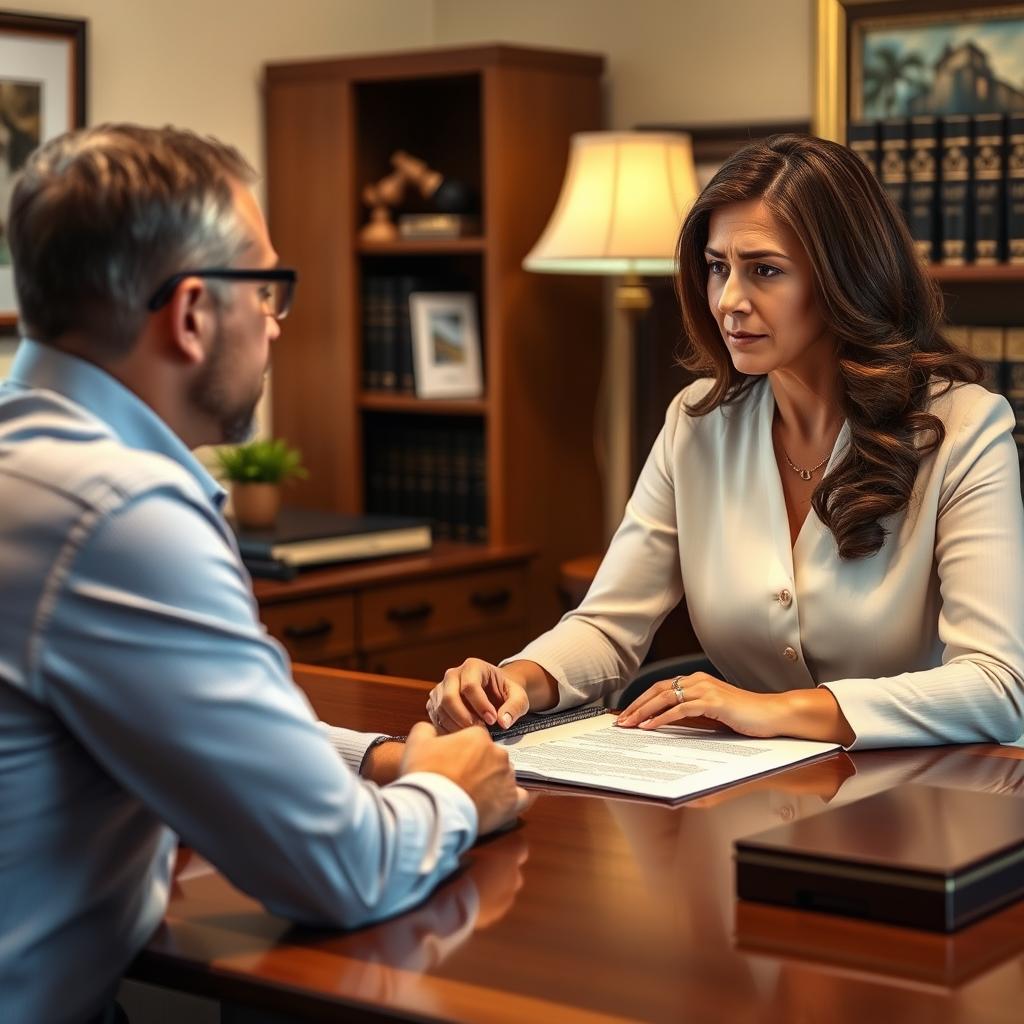
Alimony Modification Lawyer Falls Church, VA
Alimony modification petitions in Falls Church, Virginia, fall under the jurisdiction of the Falls Church Circuit Court when the spousal support obligation originated within a divorce decree, or the Falls Church Juvenile and Domestic Relations District Court when the support was ordered as a standalone matter. Virginia law allows either party to request a modification of alimony upon a showing of a material change in circumstances, as governed by the factors enumerated in Va. Code § 20‑107.1. The types of changes that courts examine include substantial shifts in income, involuntary job loss or retirement, the remarriage or cohabitation of the recipient, and health developments that affect earning capacity. Because modification proceedings are fact‑intensive, they require careful documentation and clear presentation of the change. Mr. Sris and the firm’s Of Counsel attorneys appear before the Falls Church Circuit and Juvenile and Domestic Relations courts, drawing on significant family‑law experience to assist clients in presenting their modification requests effectively. Reach Law Offices Of SRIS, P.C. at (888) 437‑7747 to request a consultation about an alimony modification matter in Falls Church. Law Offices Of SRIS, P.C. – Advocacy Without Borders.
What Alimony Modification Means in Falls Church, Virginia
Alimony, termed spousal support in Virginia, is a court‑ordered payment from one spouse to the other. A modification seeks to adjust the amount, duration, or terms of that obligation because circumstances have changed since the original order. Falls Church, an independent city of approximately 15,000 residents located just a few miles from Washington, D.C., sits within the Seventeenth Judicial District. The Falls Church Circuit Court—at 300 Park Avenue, Suite 151W—handles all divorce, equitable distribution, and spousal support matters arising from a marriage dissolution, while the Juvenile and Domestic Relations District Court handles support matters that are not tied to an underlying divorce decree. Because Falls Church is geographically compact but part of the dense Northern Virginia region, many of the individuals who appear in its courts live and work across the broader D.C. Metro area, making income analysis, cost‑of‑living adjustments, and employment changes particularly relevant in alimony modification cases.
Virginia is an equitable distribution state where spousal support determinations are guided by the thirteen factors listed in Va. Code § 20‑107.1(E). These factors include the parties’ earning capacities, ages, health conditions, the standard of living established during the marriage, and the duration of the marriage. In a modification proceeding, the court reassesses these factors in light of the alleged change. For example, a payor who has experienced a substantial and involuntary reduction in income may petition to lower support. Conversely, a recipient whose needs have increased owing to illness or disability may seek an upward modification. The Falls Church courts approach each petition with a focus on the specific financial evidence and the credibility of the asserted change. Because the city’s court docket draws from a relatively small population, the judges who serve there are particularly familiar with local economic conditions and employment sectors, which can inform the court’s assessment of what constitutes a material change.
How Mr. Sris and the Firm’s Of Counsel Attorneys Handle Alimony Modification Cases
The firm’s approach to an alimony modification begins with a thorough review of the existing support order, the financial affidavits that were filed when the order was entered, and the complete financial picture of both parties as it exists today. The attorneys evaluate whether the change that has occurred is material and involuntary—for instance, a layoff, a medically documented disability, or the recipient’s remarriage. If a good‑faith basis for a modification exists, the firm prepares and files a motion or petition with the appropriate Falls Church court, accompanied by a detailed statement of the changed circumstances and updated income and expense statements.
Because many modification disputes are resolved through negotiation rather than litigation, the firm’s attorneys often open discussions with opposing counsel to explore whether a stipulated modification can be reached. If an agreement is not possible, the matter proceeds to a hearing where the court takes testimony and examines financial records. The attorneys present the evidence clearly, focusing on the factors under Va. Code § 20‑107.1 that support the requested change. Throughout the process, the firm keeps the client informed about realistic expectations, never guaranteeing an outcome but working toward a resolution that reflects the current circumstances.
About Mr. Sris and the Firm’s Of Counsel Attorneys
Mr. Sris, Owner and Founder of Law Offices Of SRIS, P.C., established the firm in 1997. A former prosecutor, he brings rigorous analytical discipline to family‑law matters, including alimony modification. His legislative involvement includes testifying before the Virginia House Courts of Justice Committee in support of 2019 HB 635 (chief patron Del. David Bulova). Mr. Sris is admitted to practice in Virginia, Maryland, the District of Columbia, New Jersey, and New York, and he maintains a caseload that allows direct involvement in matters of significant financial consequence.
The firm’s Of Counsel attorneys contribute substantial experience in Virginia family law, including contested and uncontested divorce, equitable distribution, child custody, and spousal support modification. The collective background includes prior experience in litigation and nuanced financial analysis, which is particularly valuable when evaluating income streams, business interests, and retirement assets that often arise in alimony modification proceedings. Together, Mr. Sris and the firm’s Of Counsel attorneys serve clients in Falls Church from the firm’s Fairfax location, appearing regularly before the local Circuit Court and Juvenile and Domestic Relations District Court. Prior results vary; no guarantee of a particular outcome can be made.
Frequently Asked Questions
What is required to modify alimony in Virginia?
To modify alimony in Virginia, the party requesting the change must show a material change in circumstances that was not anticipated at the time of the original order. The change might involve a substantial increase or decrease in income, involuntary job loss, retirement, the remarriage of the recipient, cohabitation in a relationship analogous to marriage, or a significant change in health. The court evaluates the circumstances under the factors listed in Va. Code § 20‑107.1, and the evidence must demonstrate that the change is both real and durable, not temporary or speculative. For guidance tailored to your situation, reach Law Offices Of SRIS, P.C. at (888) 437‑7747.
Where are alimony modification cases heard in Falls Church?
Alimony modification cases in Falls Church are heard in the Falls Church Circuit Court when the spousal support springs from a divorce decree, or in the Falls Church Juvenile and Domestic Relations District Court when the support order stands alone. The Circuit Court is located at 300 Park Avenue, Suite 151W, Falls Church, VA 22046. The Juvenile and Domestic Relations District Court shares the same building. Knowing the correct venue from the outset avoids procedural delays and ensures the modification petition is filed in the court with proper jurisdiction over the matter.
How does remarriage affect alimony in Virginia?
Under Virginia law, the remarriage of the spouse receiving support terminates the payor’s obligation to make further payments unless the parties agreed otherwise in a written separation agreement. When a recipient remarries, the payor may file a motion to terminate support, and the court applies the statutory termination rule found in Va. Code § 20‑109. Cohabitation, however, does not automatically terminate support but may trigger a modification if the recipient’s financial needs have materially decreased. To discuss how a change in marital status affects your case, contact Law Offices Of SRIS, P.C. at (888) 437‑7747.
Can alimony be increased after a divorce in Virginia?
A recipient spouse may petition to increase alimony when a material change in circumstances has occurred, such as a significant worsening of health, a substantial increase in the payor’s income, or a demonstrated rise in the recipient’s necessary living expenses beyond what was anticipated at the time of the original order. The recipient must present updated financial records and, often, medical or employment documentation. The Falls Church courts evaluate these petitions against the same statutory factors used in initial support determinations. Prior results vary; a favorable outcome in one case does not guarantee a similar result in another.
What documents are needed for an alimony modification in Falls Church?
You will typically need the original support order, recent pay stubs, tax returns from the last two or three years, bank and investment account statements, and any documentation of the changed circumstance—such as a termination notice, a medical report, or evidence of the recipient’s remarriage. Updated income and expense statements are also required. The Falls Church courts are precise about financial disclosures, and incomplete filings can delay a hearing. An attorney can help gather and organize the necessary records before filing.
How long does an alimony modification take in Falls Church?
The timeline for an alimony modification in Falls Church depends on the complexity of the financial issues, the court’s docket, and whether the parties can reach an agreement. If both sides consent to a modification, the matter can be resolved fairly quickly through a consent order. Contested modifications, especially those involving business valuation or forensic accounting, take longer because they require discovery and possibly an evidentiary hearing. The Falls Church courts schedule hearings based on their calendar and the nature of the motion.
For additional family‑law resources in nearby jurisdictions, see our pages on Fairfax County family law representation, Fairfax City family law guidance, Prince William County spousal support practice, and Manassas family law services.
Official primary‑source references: Virginia Code § 20‑107.1 – Spousal Support Factors • Falls Church Circuit Court • Virginia Judicial System
Attorney advertising. Prior results do not guarantee a similar outcome. Results may vary.
Case results depend on a variety of factors unique to each case.