
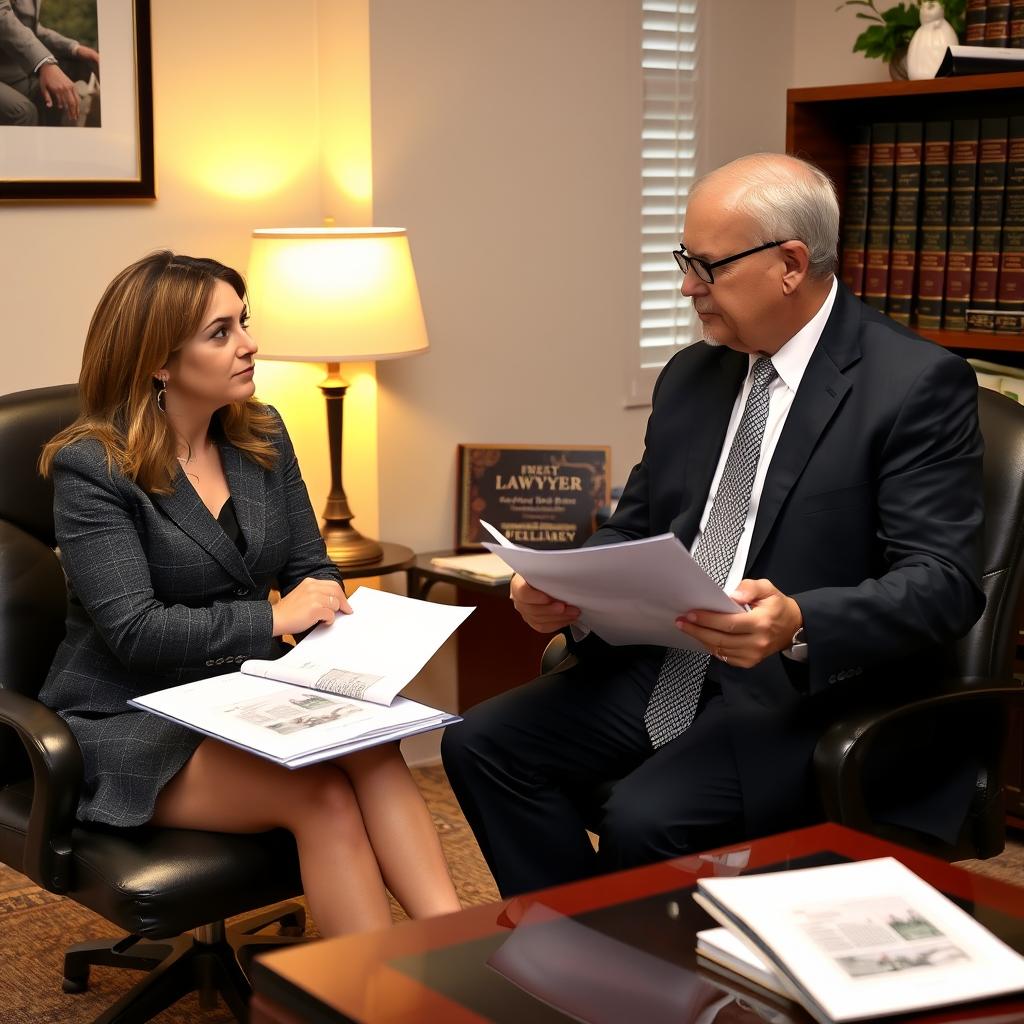
Beach Military Divorce Lawyer Alexandria, VA
Navigating a military divorce in Alexandria, Virginia presents unique legal challenges. Service members and their spouses face overlapping federal and state statutes that govern everything from pension division to custody arrangements. Whether you are stationed at Fort Belvoir, work at the Pentagon, or serve at Joint Base Myer-Henderson Hall, the decisions you make now will shape your financial future and your relationship with your children. Mr. Sris and his Of Counsel at Law Offices Of SRIS, P.C. Concentrate a substantial portion of their practice on resolving military family law matters for clients throughout Alexandria and Northern Virginia. They understand the interplay between the Servicemembers Civil Relief Act, the Uniformed Services Former Spouses’ Protection Act, and Virginia’s equitable distribution statutes. If you need guidance that accounts for both military service requirements and your family’s well‑being, reach Law Offices Of SRIS, P.C. at (888) 437‑7747 to request a consultation. Law Offices Of SRIS, P.C. – Advocacy Without Borders.
Virginia recognizes both fault‑based and no‑fault grounds for divorce; a no‑fault divorce is available after six months of separation when no minor children are involved and a separation agreement has been signed, or after one year otherwise.
Source: Va. Code § 20‑91. Virginia Code § 20‑91
Reviewed by Mr. Sris, admitted in VA/MD/DC/NJ/NY.
What Does a Military Divorce Mean in Alexandria, Virginia?
A military divorce in Alexandria refers to the dissolution of a marriage where one or both spouses are active‑duty, reserve, or retired members of the United States Armed Forces. While Virginia law provides the procedural framework—including grounds for divorce, property division, spousal support, and child custody—federal law adds layers of protection and complication that civilian divorces do not have. The Servicemembers Civil Relief Act (SCRA) allows active‑duty personnel to request a stay of court proceedings when their military duties prevent meaningful participation. The Uniformed Services Former Spouses’ Protection Act (USFSPA) governs how military retired pay can be treated as marital property. In Alexandria, the Circuit Court at 520 King Street hears all divorce and equitable distribution matters, while the Juvenile and Domestic Relations District Court handles standalone custody, visitation, and support issues. Because Alexandria is home to a significant military population—families connected to the Pentagon, Fort Belvoir, Joint Base Myer‑Henderson Hall, and the broader National Capital Region—courts here are particularly familiar with military schedules, deployment concerns, and the need for flexibility when service obligations arise.
How Mr. Sris and His Of Counsel Handle Beach Military Divorce Matters
Mr. Sris and his Of Counsel approach each military divorce case by first identifying the service member’s branch, duty status, and anticipated deployment schedule. They then evaluate how the SCRA may affect the timing of pleadings, discovery, and hearings. Where a stay is requested, they work to ensure that temporary support and custody orders are entered as soon as the law permits so that the family’s day‑to‑day needs are not held hostage to a deployment cycle. On property issues, their analysis focuses on the characterization of military retired pay under the USFSPA and Virginia’s equitable distribution factors set forth in Va. Code § 20‑107.3. They prepare qualified domestic relations orders (QDROs) when necessary to divide thrift savings plan accounts, 401(k)‑style plans, and other military retirement assets. Because many of these cases involve parties who live in different states or overseas, the team is experienced in coordinating electronic discovery, video depositions, and remote court appearances where authorized. Throughout the process, they communicate with you about what to expect at each stage, helping you make informed decisions that align with your long‑term objectives.
About Mr. Sris and His Of Counsel Team
Mr. Sris, Owner and Founder of Law Offices Of SRIS, P.C., has been practicing law since 1997. His background as a former prosecutor gives him a comprehensive understanding of courtroom procedure and evidence—a perspective that proves valuable when military divorce cases involve contested custody or allegations that could affect security clearances. He is admitted to practice in Virginia, Maryland, the District of Columbia, New Jersey, and New York. Mr. Sris testified before the Virginia House Courts of Justice Committee in support of 2019 HB 635 (chief patron Del. David Bulova), a measure that strengthened the enforcement of property division orders involving retirement assets. Together with his Of Counsel team, Mr. Sris brings extensive combined legal experience to military family law. Results may vary. The firm serves clients in Alexandria from its Arlington Location at 1655 Fort Myer Dr, Suite 700, Arlington, VA 22209. All consultations are by appointment. Call (888) 437‑7747 to schedule.
Frequently Asked Questions About Military Divorce in Alexandria
Can the Servicemembers Civil Relief Act (SCRA) delay my divorce in Virginia?
Yes, the SCRA allows a service member to request a stay of court proceedings for at least 90 days—and often longer—when military duties materially interfere with their ability to participate in the case. This protection applies to the service member, not the civilian spouse. However, the stay does not stop the clock on the mandatory separation period required for a no‑fault divorce in Virginia. A civilian spouse can still file for divorce and begin the separation timeline. A court may also enter temporary child support and spousal support orders during the stay to protect the family’s immediate financial needs. An experienced attorney can help draft a motion that respects the service member’s obligations while safeguarding the non‑military spouse’s rights.
How does deployment affect child custody and visitation in a Virginia military divorce?
India is not a signatory to the 1980 Hague Convention on Civil Aspects of International Child Abduction.
Deployment does not automatically strip a service member of custody or visitation rights under Virginia law; however, the court will fashion a temporary arrangement that prioritizes the child’s best interests while accommodating the parent’s service. Virginia courts are required to consider a parent’s military status as one factor among many when determining custody. Many judges work with parties to create deployment‑specific parenting plans that outline contact through video calls, email, and letters, and that designate a temporary caregiver—often a grandparent or other family member—during the deployment. The service member’s immediate return to the prior parenting schedule upon redeployment is typically built into the plan. For guidance on creating a deployment‑ready parenting plan, reach Law Offices Of SRIS, P.C. at (888) 437‑7747.
How is a military pension divided in an Alexandria divorce?
Military retired pay is treated as marital property under Virginia law and may be divided by the court as part of equitable distribution, subject to the limits of the Uniformed Services Former Spouses’ Protection Act (USFSPA). The USFSPA authorizes a Virginia court to treat disposable retired pay as divisible property so long as the 10‑year “10/10 rule” regarding overlapping marriage and service is met—or, alternatively, even without meeting that rule, the court may order a division using a formula that awards the former spouse a portion of the retirement. A qualified domestic relations order (QDRO) or a similar military‑specific order is typically necessary to implement the division through the Defense Finance and Accounting Service. The precise calculation depends on the length of the marriage, the length of service, and the member’s rank.
Do I need a lawyer for a military divorce in Alexandria?
Virginia does not require either party to hire a lawyer to obtain a divorce, but handling a military divorce without experienced counsel can expose you to costly mistakes regarding pension division, survivor benefits, and jurisdictional issues. Military families often have assets in multiple states, rely on TRICARE health benefits, and live under threat of future PCS moves that can upend custody arrangements. An attorney familiar with both the Virginia Code and the federal statutes unique to military life can help you negotiate a settlement that protects your long‑term interests. For a consultation about your situation, contact Law Offices Of SRIS, P.C. at (888) 437‑7747.
What should I bring to my first consultation with a military divorce lawyer?
Ideally, you should bring your marriage certificate, a current LES (Leave and Earnings Statement) or retiree account statement, the most recent three years of tax returns, any existing separation agreement or protective order, and a list of questions you want answered. If you are a civilian spouse, gathering the service member’s full name, Social Security number, and branch of service helps the attorney verify duty status and calculate potential retired pay exposure. Information about children—school records, medical records, and any custody or visitation schedule already in place—will also help the lawyer assess the family’s circumstances. Do not worry if you are missing documents; an initial consultation is about identifying the path forward, and the firm can assist in collecting necessary records.
Related practice areas:
Family Law Lawyer Fairfax County VA ·
Family Law Lawyer Fairfax City VA ·
Family Law Lawyer Falls Church VA ·
Family Law Lawyer Prince William County VA ·
Family Law Lawyer Manassas VA
Virginia legal resources (links open in a new tab):
Virginia Code Title 20 – Domestic Relations ·
Virginia Judicial System ·
Virginia State Corporation Commission (for business division matters)
Attorney advertising. Prior results do not guarantee a similar outcome. Case results depend on a variety of factors unique to each case. Results may vary.