
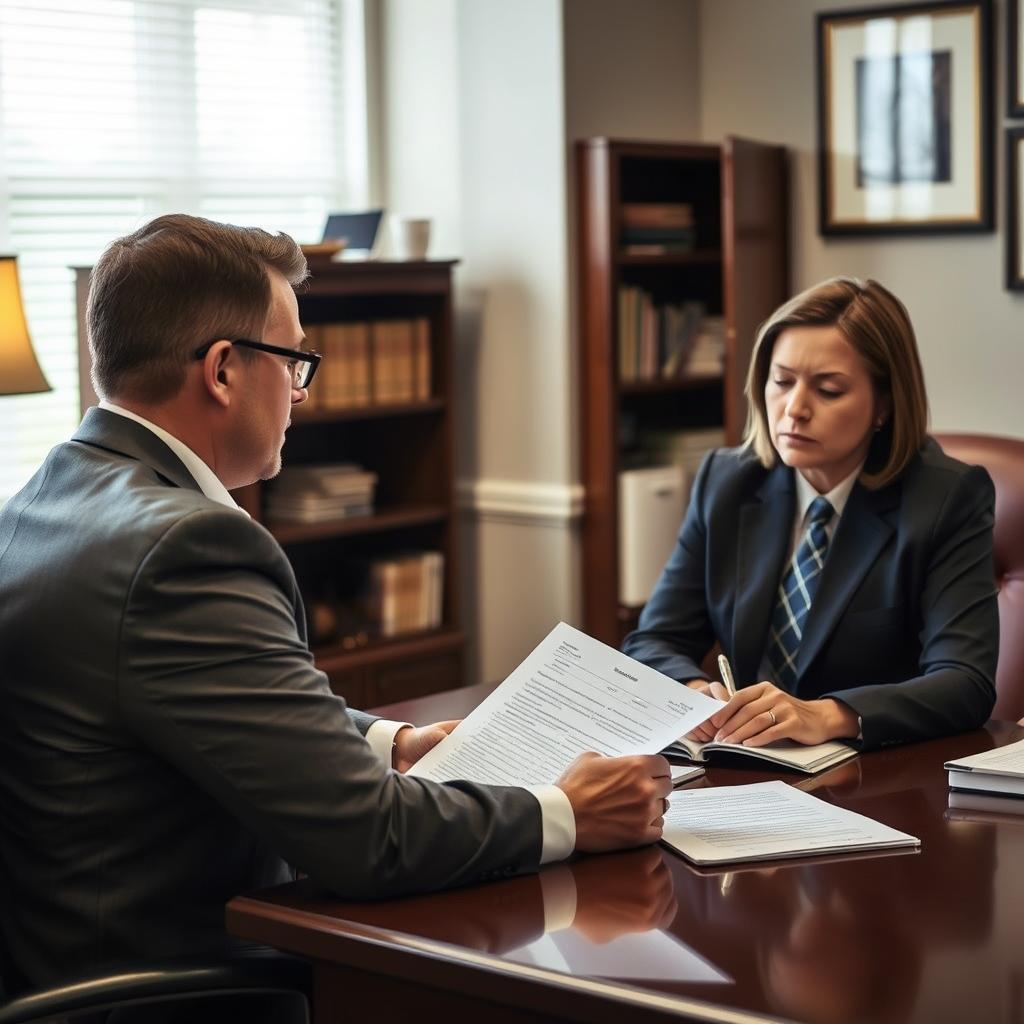
Armed Forces Divorce Lawyer Alexandria, VA
Military couples confronting divorce in Alexandria face a distinctive set of legal rules that civilian families rarely encounter. The Servicemembers Civil Relief Act (SCRA) can pause court proceedings when a service member is deployed, the Uniformed Services Former Spouses’ Protection Act (USFSPA) controls how military pensions are divided, and Virginia’s equitable distribution statute determines everything else. Mr. Sris and his Of Counsel help active‑duty members, reservists, and their spouses work through these intersecting laws so that both sides can move forward with clarity. Whether you are stationed at Fort Belvoir or Joint Base Myer‑Henderson Hall, or whether you have recently separated from service, our firm is prepared to address the custody, support, and property‑division issues that military divorce raises. To discuss your situation, call (888) 437‑7747.
What to Know About Armed Forces Divorce in Alexandria, VA
Military divorce in Alexandria follows the same Virginia Code Title 20 framework as any other divorce—fault and no‑fault grounds under Va. Code § 20‑91, equitable distribution under Va. Code § 20‑107.3, and child‑custody determinations under the trusted‑interests factors in Va. Code § 20‑124.3. The critical difference is the overlay of federal statutes that can change when and how a divorce proceeds. The Servicemembers Civil Relief Act, for instance, allows a service member to request a stay of proceedings if military duties materially affect the ability to respond. That stay does not stop the case permanently, but it can extend the timeline significantly. Likewise, the USFSPA permits Virginia courts to treat disposable military retired pay as marital property, provided the marriage lasted at least ten years of creditable military service—a threshold that comes directly from the statute and not from Virginia case law.
Alexandria Circuit Court, located at 520 King Street, handles all divorce and equitable‑distribution matters in the city. Because military couples often live outside Virginia but file where one spouse is domiciled, the six‑month residency requirement under Va. Code § 20‑97 is a threshold issue in many armed‑forces divorce cases. A service member who maintains Virginia as the state of legal residence may file here even if currently stationed elsewhere, while a non‑military spouse may also file if they meet the residency rule. Mr. Sris and his Of Counsel are familiar with the jurisdictional intersections that military families face and regularly appear at the Alexandria Circuit Court.
How Mr. Sris and His Of Counsel Handle Military Divorce Cases
Each armed‑forces divorce starts with a careful review of the couple’s legal status and the timing of any deployment or PCS orders. The first step is to confirm that the Virginia court has jurisdiction over the service member and that any mandatory waiting periods under Va. Code § 20‑91 have been satisfied. If a service member is on active duty and unable to participate, the firm works with the parties to secure a mutually agreeable timeline or, when necessary, to present a stay request under the SCRA. Early attention to pension division is essential—the USFSPA requires certain language to be included in the final decree to ensure that the Defense Finance and Accounting Service (DFAS) will honor a direct payment order. Mr. Sris and his Of Counsel draft those provisions to meet the statutory requirements, minimizing the risk of a rejected qualified domestic relations order (QDRO).
Child‑custody and visitation arrangements in military families involve practical issues that civilian courts do not always address. A parenting plan may need to account for a parent’s deployment cycle, the designation of a temporary caretaker during absence, or a relocation triggered by a permanent change of station. Virginia law allows a court to consider the availability of each parent to care for the child, and military schedules often become a central fact in those determinations. The firm helps clients build parenting plans that are realistic for a military lifestyle and that comply with Alexandria J&DR District Court expectations when custody is at issue.
Frequently Asked Questions
How does military divorce differ from civilian divorce in Virginia?
Military divorce in Virginia is affected by federal laws that can pause proceedings, protect service members from default judgments, and control the division of military retired pay. The SCRA may delay court actions if a service member’s duties prevent participation, while the USFSPA allows a Virginia court to divide disposable retired pay as marital property after a marriage that overlaps with at least ten years of creditable service. The underlying divorce grounds and equitable‑distribution factors are the same as for civilians under Va. Code §§ 20‑91 and 20‑107.3, but the practical effect of deployment, relocation, and pension valuation makes the process more layered. For these reasons, representation by counsel familiar with both Virginia family law and the military statutes can help the case move forward more predictably.
Does the SCRA automatically stop a divorce if a service member is deployed?
The SCRA does not automatically stop a divorce; the service member must request a stay and show that military duties materially affect the ability to participate. If the court grants the stay, proceedings pause for a period set by the court, which can be extended. The statute also protects against a default judgment being entered without the service member having received actual notice and a reasonable opportunity to respond. A non‑military spouse can still file, but the case may not move forward until the stay is lifted or the court finds that the service member’s absence does not prevent the matter from being heard. Mr. Sris and his Of Counsel can evaluate whether a stay is appropriate and represent either party in the proceedings.
Can a military spouse receive a portion of the service member’s pension in an Alexandria divorce?
Yes, under the USFSPA, a Virginia court can award a former spouse a share of the service member’s disposable military retired pay if the marriage lasted at least ten years of overlapping creditable service. The court will apply Virginia equitable‑distribution principles to decide what percentage, if any, of the pension is marital property. Even if the ten‑year overlap is not met, the court may still consider the pension as marital property and assign an offset, though DFAS will not make direct payments in that scenario. The final divorce decree must include specific wording to trigger direct payment, and Mr. Sris and his Of Counsel work to ensure the order complies with DFAS requirements.
What happens if a parent on active duty is deployed during a custody dispute?
If a parent is deployed during a custody case, the court will typically consider the deployment as a factor in evaluating the child’s best interests under Va. Code § 20‑124.3, but deployment alone is not grounds to permanently change custody. Virginia law allows a service member to designate a family member or other person to exercise visitation on their behalf during deployment, and courts often craft temporary orders that preserve the deployed parent’s relationship with the child. A return from deployment generally triggers a revisit of the custody and visitation arrangement. The court’s focus remains on the child’s stability and the parent’s availability, and the firm helps clients craft parenting plans that address deployment cycles realistically.
Where are armed forces divorce cases filed in Alexandria?
Armed forces divorces in Alexandria are filed in the Alexandria Circuit Court, which has exclusive jurisdiction over divorce and property‑division matters. Standalone custody, visitation, and child‑support petitions may be filed in the Alexandria Juvenile and Domestic Relations District Court. The Circuit Court is located at 520 King Street, 2nd Floor, Alexandria, Virginia 22320. Service members who maintain Virginia as their legal residence may file in Alexandria even if they are stationed out of state, provided the Virginia residency requirement of at least six months is met. Mr. Sris and his Of Counsel appear regularly at the Alexandria Circuit Court and are familiar with its procedures.
Do I need a lawyer for a military divorce in Alexandria?
While no law requires a lawyer to file for divorce, military divorce involves intersecting state and federal laws that can create unintended consequences if not properly addressed. Issues such as pension division, SCRA protections, jurisdiction, and child‑custody plans tailored for deployment are complex. A party who proceeds without counsel may miss a statutory deadline, fail to include the correct pension language, or unknowingly waive a federal protection. Mr. Sris and his Of Counsel can assist with the entire process, from confirming jurisdiction to drafting a final order that complies with both Virginia law and the USFSPA. For guidance on your specific situation, reach Law Offices Of SRIS, P.C. at (888) 437‑7747.
How does Virginia’s equitable distribution work when one spouse is in the military?
Virginia classifies property as marital, separate, or hybrid under Va. Code § 20‑107.3 and then divides marital property equitably—not necessarily equally—after considering eleven statutory factors. Military retirement benefits earned during the marriage are typically marital property. The court will also look at the contributions of each spouse to the well‑being of the family, the length of the marriage, the ages and health of the parties, and the circumstances that led to the divorce. Frequent moves and deployments can shape the economic picture, and the court has discretion to make an unequal division if the facts support it. Mr. Sris and his Of Counsel help clients gather the necessary financial information and present it clearly to the court.
Can a non‑military spouse remain in base housing during the divorce?
Base housing eligibility during a divorce depends on the service member’s status and installation regulations, not the state divorce court. Generally, a spouse who is not a service member may lose housing privileges once the divorce is final or when the service member is no longer required to provide support under military regulations. Temporary support orders from the Virginia court may address housing costs outside the base, but the court cannot order the military to extend access to on‑post housing. Mr. Sris and his Of Counsel assist clients in understanding how the divorce decree interacts with military support obligations and can seek pendente lite spousal support when necessary.
What is the role of the Servicemembers Civil Relief Act in a Virginia divorce?
The SCRA provides active‑duty service members with protections against default judgments and the ability to request a stay of proceedings when military duties affect their ability to defend the case. A court must appoint an attorney to represent an absent service member before entering a default judgment, and the service member can later apply to reopen the judgment if SCRA rights were not honored. A non‑military spouse can still file and serve the petition, but the court will typically not proceed without evidence that the service member has received actual notice. The firm works with both military and civilian spouses to ensure the process complies with the SCRA.
How is child support calculated when one parent is on active duty?
Virginia child‑support guidelines under Va. Code § 20‑108.1 apply to military families just as they do to civilians; the court calculates support based on the combined gross income of the parents. Military pay includes base pay, basic allowance for housing (BAH), and basic allowance for subsistence (BAS), as well as any special pays. The court may impute income to a service member who voluntarily reduces earnings. The result is a presumptive amount, which the court can deviate from if applying the guidelines would be unjust. The calculation also accounts for the cost of health insurance and child‑care expenses. Mr. Sris and his Of Counsel can help ensure the financial picture presented to the court is complete and accurate.
About Mr. Sris and His Of Counsel Team
Mr. Sris, Owner and Founder of Law Offices Of SRIS, P.C., has practiced family law since 1997 and is admitted in Virginia, Maryland, the District of Columbia, New Jersey, and New York. He draws on years of litigation experience to handle armed‑forces divorce matters with an understanding of both state and federal military‑family law. He is joined by Of Counsel with complementary backgrounds, including former prosecution and military‑adjacent experience, enabling the firm to address the full scope of a military divorce—from jurisdictional questions to pension division and custody arrangements. Together, they serve Alexandria and the surrounding Northern Virginia communities from the firm’s Arlington location. To discuss the details of your matter, call (888) 437‑7747.
Also serving these Northern Virginia communities:
Family Law Lawyer Fairfax County |
Family Law Lawyer Fairfax City |
Family Law Lawyer Falls Church |
Family Law Lawyer Prince William County |
Family Law Lawyer Manassas City
Outbound authority sources: Virginia Code Title 20 (Domestic Relations) | Alexandria Circuit Court | Virginia Judicial System
Attorney advertising. Prior results do not guarantee a similar outcome. Results may vary.
Law Offices Of SRIS, P.C. — Arlington Location
1655 Fort Myer Dr, Suite 700, Room 719, Arlington, VA 22209
By appointment only. Call (888) 437‑7747.
Case results depend on a variety of factors unique to each case.