
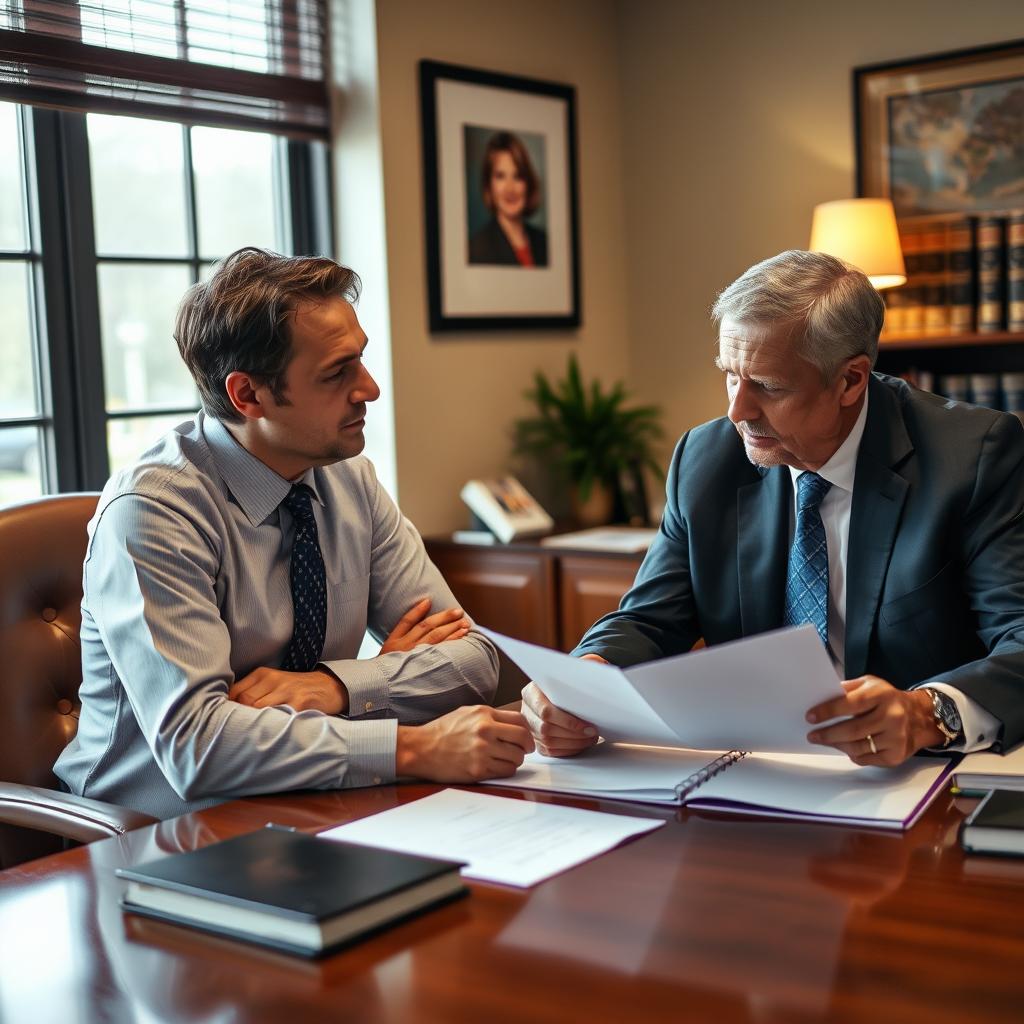
Defamation Lawyer Manassas Park, VA
A false statement published to a third party can inflict lasting damage on your personal or professional reputation. In Manassas Park, Virginia, individuals and businesses harmed by defamatory remarks—whether spoken or written—have the right to seek redress through the civil courts. Defamation law in the Commonwealth is codified at Va. Code § 8.01‑45, which recognizes libel and slander as actionable torts. A defamation claim must be brought within one year of the statement’s publication (Va. Code § 8.01‑247.1), making prompt legal assessment essential. Law Offices Of SRIS, P.C. represents clients in defamation litigation throughout Manassas Park, appearing in the Manassas Park General District Court and the Manassas Park Circuit Court from our Fairfax location. Mr. Sris and his Of Counsel bring over 120 years of combined legal experience and 4,739+ documented firm-wide results to each defamation matter. Results may vary. For a consultation about your defamation concerns, reach our location at (888) 437‑7747. Law Offices Of SRIS, P.C. – Advocacy Without Borders.
What Defamation Means in Manassas Park
Under Virginia law, defamation is the unprivileged publication of a false statement that tends to harm the reputation of the person about whom it was made. Defamation takes two forms: libel (written or otherwise permanently recorded) and slander (spoken). Virginia also recognizes “defamation per se,” which applies to statements that are so inherently damaging that the law presumes harm—for example, false allegations of a crime, of a loathsome disease, or of conduct incompatible with a person’s trade or profession. In Manassas Park, a defamation claim proceeds as a civil action for damages. Whether the case is heard in the General District Court or the Circuit Court depends on the amount in controversy. Claims within the concurrent civil jurisdiction of the General District Court may be filed there; larger claims are brought in the Circuit Court. Both courts operate from the courthouse at 9311 Lee Avenue, Suite 230, Manassas, VA 20110. Because Manassas Park is an independent city that shares its courthouse with Prince William County, litigants appear before judges of the Thirty‑first Judicial District. No matter where the case is filed, pleadings must comply with the Virginia Rules of the Supreme Court of Virginia, and the plaintiff must plead the allegedly defamatory statement with specificity.
Manassas Park’s community is closely knit, and the impact of a false statement can be magnified when it circulates among neighbors, business associates, or local government offices. Defamation matters arising here often involve small‑business disputes, online reviews, social‑media posts, or statements made in the course of local political campaigns. While the legal framework is state‑wide, familiarity with the local court’s procedures and the expectations of the judges assigned to Manassas Park’s docket can be an advantage. Law Offices Of SRIS, P.C. has handled defamation cases throughout Northern Virginia, and our understanding of how local courts manage pleading‑sufficiency challenges, discovery deadlines, and pretrial motions informs our approach. We also counsel clients on the intersection of defamation with other torts, such as insulting words (Va. Code § 8.01‑45) and tortious interference with contract or business expectancy, which may arise in the same set of facts.
How Mr. Sris and His Of Counsel Handle Defamation Cases
Defamation litigation in Virginia demands a careful evaluation of the facts at the outset. A successful claim requires proof that the defendant made a false statement of fact, that the statement was published to a third party, and that the publication caused harm. Because Virginia follows a strict pleading standard, the complaint must identify the precise words used, the date and context of publication, and the individuals to whom the statement was communicated. Mr. Sris and his Of Counsel begin by reviewing the statement in question, analyzing potential defenses such as truth, privilege (absolute or qualified), and fair‑comment protections. They also assess whether the matter falls under the defamation‑per‑se doctrine, which can affect the proof needed to establish damages.
Once the legal theories are identified, the focus shifts to evidence preservation and discovery. In defamation cases, preserving social‑media posts, emails, text messages, and witness recollections is critical. Mr. Sris and his Of Counsel work with clients to gather and safeguard this evidence. Where appropriate, they may send a pre‑suit demand letter requesting a retraction or correction, which in some circumstances can mitigate damages. If litigation is necessary, they prepare the complaint in conformity with Virginia’s Rules of Court, serve process in compliance with Va. Code § 8.01‑296, and engage in discovery to test the defendant’s version of events. Throughout the process, they explore opportunities for early resolution through negotiation or mediation, while remaining prepared to try the case before a judge or jury in Manassas Park.
About Mr. Sris and His Of Counsel Team
Mr. Sris, Owner and Founder of Law Offices Of SRIS, P.C., established the firm in 1997 and has been representing clients in Virginia, Maryland, the District of Columbia, New Jersey, and New York for nearly three decades. A former prosecutor, Mr. Sris understands how parties on both sides of a case build their arguments, an insight that sharpens his strategy in defamation litigation. He testified before the Virginia House Courts of Justice Committee in support of 2019 HB 635 (chief patron Del. David Bulova), demonstrating a commitment to the legislative process that can affect civil procedure in the Commonwealth. Mr. Sris keeps his personal caseload small to ensure deep involvement, and he collaborates closely with his Of Counsel on every defamation matter the firm accepts.
Mr. Sris and his Of Counsel bring over 120 years of combined legal experience and 4,739+ documented firm-wide results to defamation and related tort claims. Results may vary. The team includes attorneys who concentrate in civil litigation and who are familiar with the procedural rhythms of the Manassas Park courts. The firm’s Fairfax location, at 4008 Williamsburg Court, Fairfax, VA 22032, is where clients meet by appointment. That location serves as the operational base for our defamation work in Manassas Park, ensuring accessible, consistent representation without the overhead of a separate local office.
Verify admissions: Virginia State Bar · Maryland Judiciary · DC Bar · NJ Courts · NY OCA
Frequently Asked Questions
How long does a civil lawsuit take in Manassas Park?
Small claims may resolve in a few months, while Circuit Court cases typically take a year or more through discovery, motions, and trial. Defamation matters filed in the General District Court often move more quickly because the procedures are streamlined and formal discovery is limited. Cases transferred to or initially filed in the Circuit Court involve broader discovery—interrogatories, document requests, and depositions—which can extend the timeline. The court’s docket, the complexity of the factual issues, and the parties’ willingness to negotiate a settlement all influence how long a case remains pending. Mr. Sris and his Of Counsel work to move matters forward efficiently while protecting the client’s interests at every stage.
How does a Virginia lawyer defend against defamation charges?
Defense strategies for defamation in Virginia may include challenging the truthfulness of the statement, asserting a privilege, or demonstrating that the statement was opinion rather than fact. Truth is an absolute defense, so a defendant can defeat a defamation claim by proving the statement was substantially true. Other defenses include absolute privilege (for statements made in judicial or legislative proceedings) and qualified privilege (for communications on matters of public interest, provided the statement was made without actual malice). Fair‑comment protections may apply to opinions about public figures or matters of public concern. An experienced attorney evaluates the specific facts under Va. Code § 8.01‑45 to determine which defenses are strongest and how to present them to the court.
What should I do if I am facing defamation charges in Manassas Park?
If you are served with a defamation complaint in Manassas Park, you should contact a civil litigation attorney immediately and avoid discussing the case with anyone other than your lawyer. Preserve all relevant documents—including the statement at issue, any correspondence, and any witnesses’ contact information. Do not attempt to publicly rebut the allegations on social media, as your own statements may be used as evidence. The one‑year statute of limitations under Va. Code § 8.01‑247.1 applies to the original defamatory publication, but once you are sued, court deadlines begin to run quickly. Mr. Sris and his Of Counsel can assess the complaint’s sufficiency, explore potential defenses, and respond within the time allowed by the Virginia Rules of the Supreme Court.
Do I need a lawyer for a defamation claim in Virginia?
You are not legally required to have a lawyer to file a defamation claim in Virginia, but navigating the pleading requirements and potential defenses without counsel is challenging. Virginia courts hold pro se litigants to the same standards as attorneys, and defamation complaints must plead the allegedly false statement with specificity. An attorney can evaluate the strength of your case, identify all available damages, and advise on the trusted venue—whether General District Court or Circuit Court. Mr. Sris and his Of Counsel have extensive experience in defamation litigation and can help you decide whether to pursue a claim, seek a retraction, or negotiate a settlement.
What damages are available in a Virginia defamation case?
Depending on the circumstances, a successful defamation plaintiff in Virginia may recover compensatory damages for actual economic loss, harm to reputation, and emotional distress. In cases of defamation per se, where the statement is so inherently damaging that harm is presumed, a plaintiff may recover damages without proving specific economic loss. Punitive damages may also be available if the defendant acted with malice or reckless disregard for the truth. The precise amount of any award is determined by the trier of fact, and Virginia law allows the court to reduce excessive verdicts. Every case is unique; prior results do not guarantee a similar outcome
How does social‑media defamation differ from traditional defamation in Virginia?
Social‑media defamation is treated under the same legal principles as traditional libel, but the evidence—and often the reach of the statement—differs significantly. Tweets, Facebook posts, and online comments are considered published for defamation purposes, and Virginia courts have applied the same pleading standard to online statements. The real challenges lie in preserving the digital record, identifying anonymous posters, and quantifying the spread of the statement online. Mr. Sris and his Of Counsel work with digital‑evidence attorneys to capture and authenticate social‑media posts, and they understand the procedural tools available, including subpoenas to internet service providers, to unmask anonymous defendants when appropriate.
Fairfax County Civil Litigation Lawyer |
Prince William County Civil Litigation Lawyer |
Manassas City Civil Litigation Lawyer |
Fairfax City Civil Litigation Lawyer |
Falls Church Civil Litigation Lawyer
Virginia Code ·
Virginia Courts
Attorney advertising. Prior results do not guarantee a similar outcome. Case results depend on a variety of factors unique to each case. Results may vary.